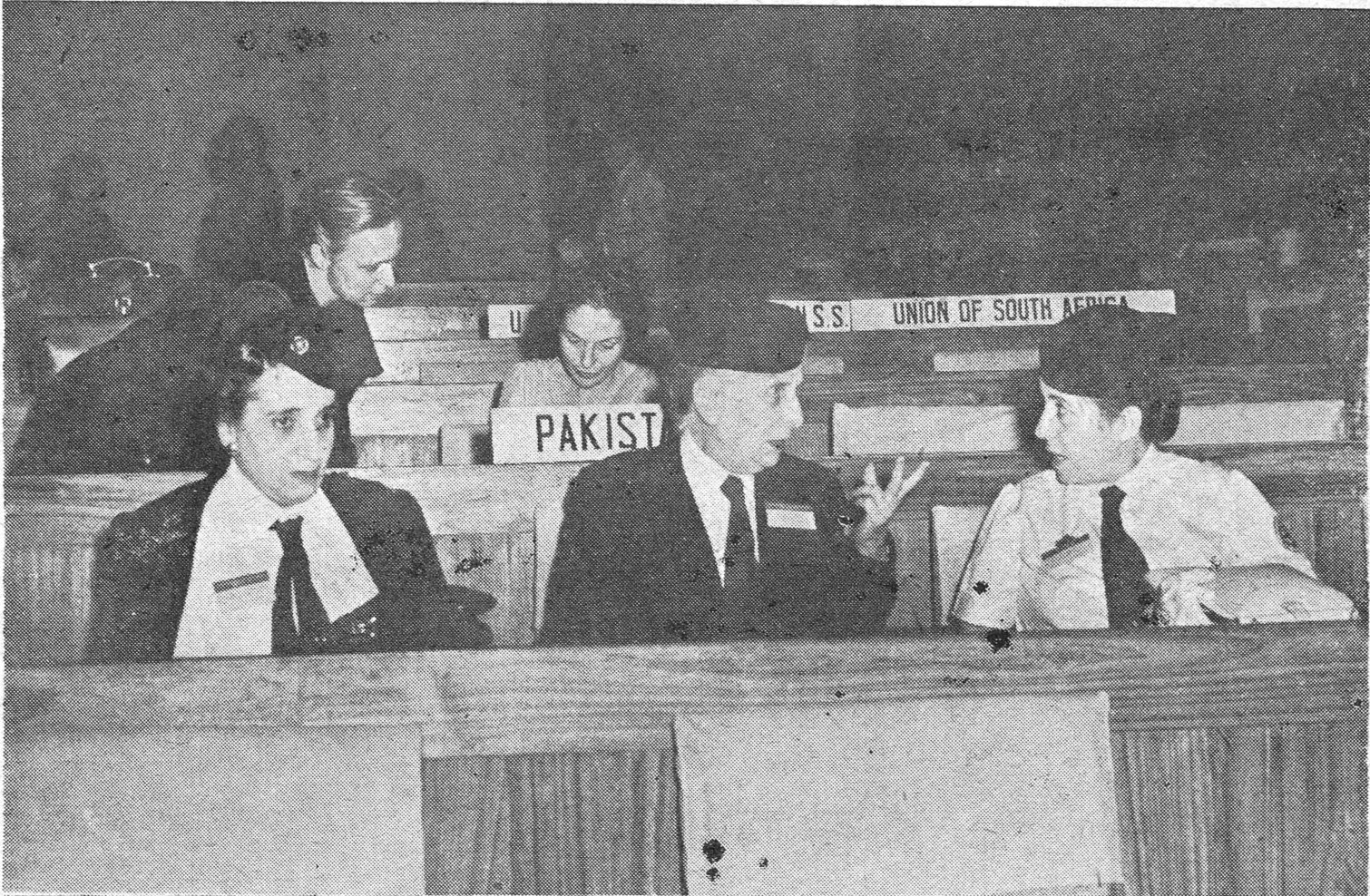
At one of the conference sessions. From right to left, Mesdames: Najla Saab, Heneni Tarcha, and Ellen Rihan.
the developments and vicissitudes of this age. They have flocked to cooperate, to lend support, and to affirm their faith, in the atomic age, in the oldest, dearest, and strongest of humanitarian movements.
The ceremony was majestic and magnificent. In it the flags of eighty-three states embraced, with tenderness, dignity, and honor, the flag of the Red Cross — the flag of service, love, and disinterestedness — and the spirit of tolerance, affection, and brotherhood reigned over the whole. Its speakers, for all their differing creeds, leanings, and material nationalisms, were unanimous in
holding fast to humanitarian principles, in achieving world peace, in condemning the selfishness and the bitter strife that poison minds and hearts, and in embracing the spirit of tolerance, of which Mr. Nehru said that it will put an
end to disputes if we make it our constitution.
Hearts filled with love, and good and kindly souls in every part of the world, are turned today toward New Delhi, full of hope that the Nineteenth Conference will bring forth decisive and respected resolutions, adding to those that came before one more proof that this humanitarian organization has been and remains a firm rock of salvation amid a raging sea of selfishness and strife, and that the principles of the Red Cross do not die and will never die so long as there are in the world believing men and women, brothers and sisters, men and women enlisted to lighten calamities, to serve humanity, and to spread justice and peace.
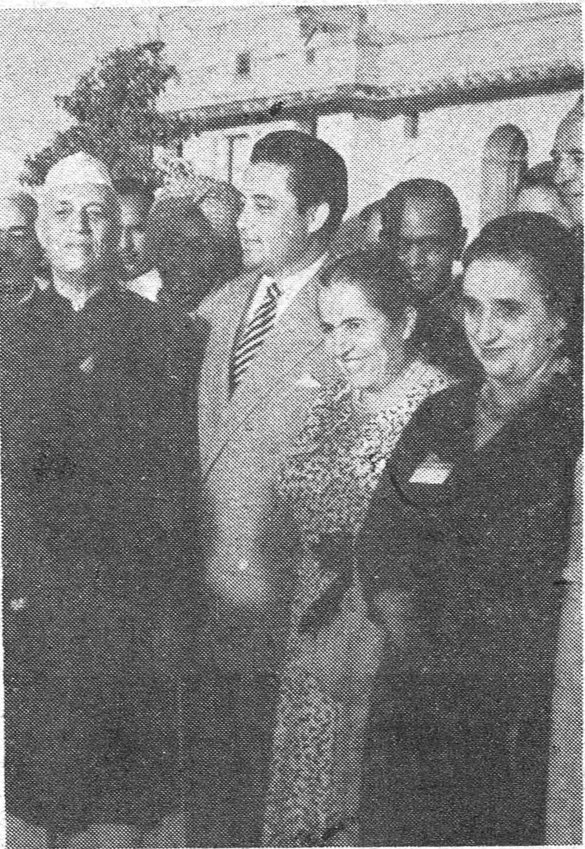
With President Nehru: Mesdames Saab and Rihan