Its function: It acts as a regulator of the "metabolism" of calcium and phosphorus, and promotes their absorption and utilization. It contributes directly to the growth and building of the bones, the development of the fetus, and the prevention of rickets. It is closely connected with the building of the teeth, the healing of wounds, and the health of the body and of respiration. It has been found that vitamin "D" is useful in fighting diseases other than rickets, such as infantile tetany, ailments of the abdomen, inflammation of the joints, and autumn fever.
Its sources — Vitamin "D" has two precursors, the first of animal origin and the second of vegetable origin, and both are converted into vitamin "D" by ultraviolet irradiation. The first, after its irradiation, is called "D3," and the second is called "D2."
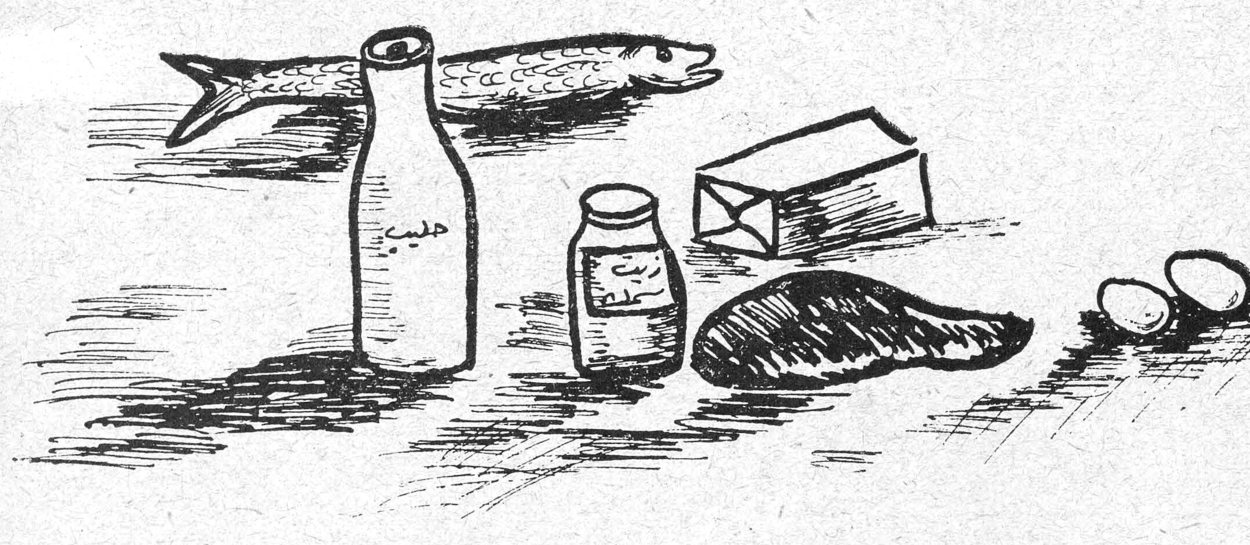
Vitamin "D3" is found in fish oil and in animal foods; its richest animal sources are cod-liver oil
and fish oil, while liver, eggs, butter, and milk contain a moderate quantity of vitamin D. The richness of the vitamin "D" in these foods depends on the animal's diet and the extent of its exposure to sunlight. Nowadays these foods are often exposed to sunlight so that the quantity of the vitamin in them may increase.
Thus it appears that the first source of vitamin "D" is food, and that the second comes by way of the skin. The precursor "D3" exists under the human skin and in its tissues; when the ultraviolet rays strike the skin, the precursor is converted into vitamin "D." These same rays that manufacture vitamin "D" in the skin also increase the circulation of the blood, which brings a fresh quantity of the precursor beneath the skin to be converted, and carries the finished vitamin "D" away quickly — lest it be exposed to the danger of excessive irradiation — distributing it through the body, above all to the bones and the teeth.
The need for it — Man needs this vitamin throughout his life. It is difficult to determine exactly how much of it a person requires, because that depends on the kind of food and on the amount of calcium and phosphorus one takes. It also depends on the extent of one's exposure to sunlight. The amount we derive from the sun depends on
the weather, the season, the height of the sun, the length of exposure, the kind of clothing, and whether one lives in the city or the country. What a person needs daily is very small — 5 international units — rising to 400 units in the stages of childhood, adolescence, pregnancy, and nursing. Excess in taking it must be avoided, for it causes loss of appetite, nausea, vomiting, diarrhea, loss of weight, and poisoning. This condition is known as Hypervitaminosis.
Its deficiency — Rickets is the famous disease resulting from a deficiency of vitamin "D." It is most common among children, though adults are afflicted with a form of it called osteomalacia (Osteomalacia), that is, a softening and slackening of the bones. Rickets invades the bones and causes defects in them and a swelling of their extremities and joints, because it hinders their saturation with calcium, which leads to deformation of the skeleton. It may also produce a bending and bowing of the ribs, leading to difficulty in breathing. Its deficiency likewise leads to enlargement of the thyroid gland and to loss of the mineral salts. And there is a scientific theory which holds that taking vitamin "D" in insufficient quantities may cause infantile paralysis, and that a sufficiency of it fortifies the body against this disease.