What shall I write about Salwa? Shall I write about that literature I leafed through in her book "With Life," in which I found an original strain of letters, or about those volumes still in her pure hand, not yet printed, which she had wished to title "Along the Paths"? Or shall I write something of those articles her gentle hand composed, demanding woman's political and social rights? Or shall I sing of the valuable lectures she delivered the day she represented Lebanon at the Women's Union congress at UNESCO in Beirut, and the day she attended the Social Studies Seminar for the Arab states of the Middle East in Cairo? Or when she represented the League of Lebanese Women's Organizations at the General Arab Women's Union Congress held in Baghdad? Or shall I take up her delightful, sweet talks, with their limpid music, which she broadcast on the radio from time to time? Or shall I speak of her as an orator who stood on the platform, touched on all manner of subjects, and regaled the public with the magic of expression and the breadth of learning God had
bestowed on her? Or shall I recall those articles and talks her kindly fingertips composed in The Woman's Voice over its twelve years, and in the magazines "The New Woman" and "Child Care" and other daily papers — defending woman's political rights, setting out Islam's position on woman's political and civil questions, singing of religious occasions, magnifying the lofty virtues? Or shall I speak of her as a virtuous, wise educator who helped to form a new generation? Or shall I speak of her and of her sweet everyday conversation, which was itself a kind of literature?
Truly, to speak of Salwa, the true and truthful friend, is delightful: it bears incense and spreads perfume; it is a pleasure, for in her words we always touch enjoyment and delight. How could it be otherwise, when her speech was a mirror of her character, an interpreter of her feelings, and pictures of all that distinguished her: a sound mind, delicacy of feeling, precision of thought, far-sightedness, and goodness of heart and of conduct.
She wrote at a time when woman did not dare to write — thirty-three years ago, that is, in 1925, when she was still among the veiled women. She wrote in defense of woman and her rights and published her article in the magazine "The New Woman." In that article her feeling showed in every line, with all its emotion and reproach, for it pained her to see one of the daughters of her own sex — a woman in the front rank of lawyers — say, "Keep the women confined" (holding that woman's entry into the battle of life weakens the feeling of motherhood in her and multiplies her fancy and her selfishness). Salwa grows angry and answers her: "If your new life does not please you, Madam, you may go back to the chains. Why does the sight of woman not gladden you, as she contends at man's side and shares with him in bearing the burdens of life? Is there anyone more able than she to wipe away the mind's weariness and lift the weight of life from a husband's brow?" And she warms to her theme and says further: "Have we not had enough of submissiveness? We want renewal. We want the free life. We want to make war on every fetter that condemns us to sleep and to slavery." Until she says: "Why would you have the body of our whole people be slaves, one half of it sound and the other half palsied and maimed? Do not suppose that I mean by this that woman should leave her house and neglect her children and her husband to go out to the market to work; rather I want her to be capable of work and of earning should necessity require it, so that she does not let her children die of hunger if the man is kept from work by some misfortune or calamity — and how many are the misfortunes and calamities of time! I want her to be a living, feeling being, not with trifling sentiments and perishable emotion, but with what benefits her people, enriches them, and makes them happy."
Among Salwa's literary production are exquisite tableaux and splendid social subjects drawn from the very heart of reality, representing our society truly and picturing it in the most exact sense. The reader may sense this through the title, which points precisely to its meaning — "With Life" — a book of tales brimming with
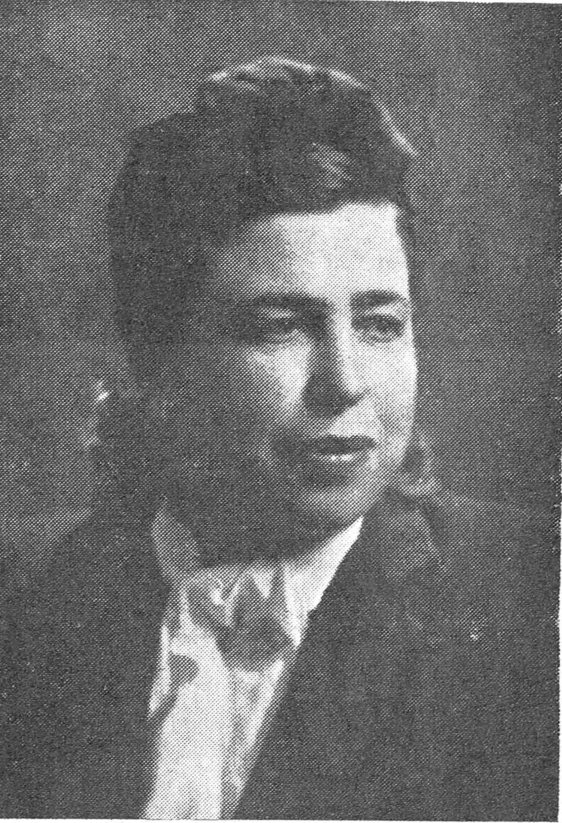
Zahiyah Dughan