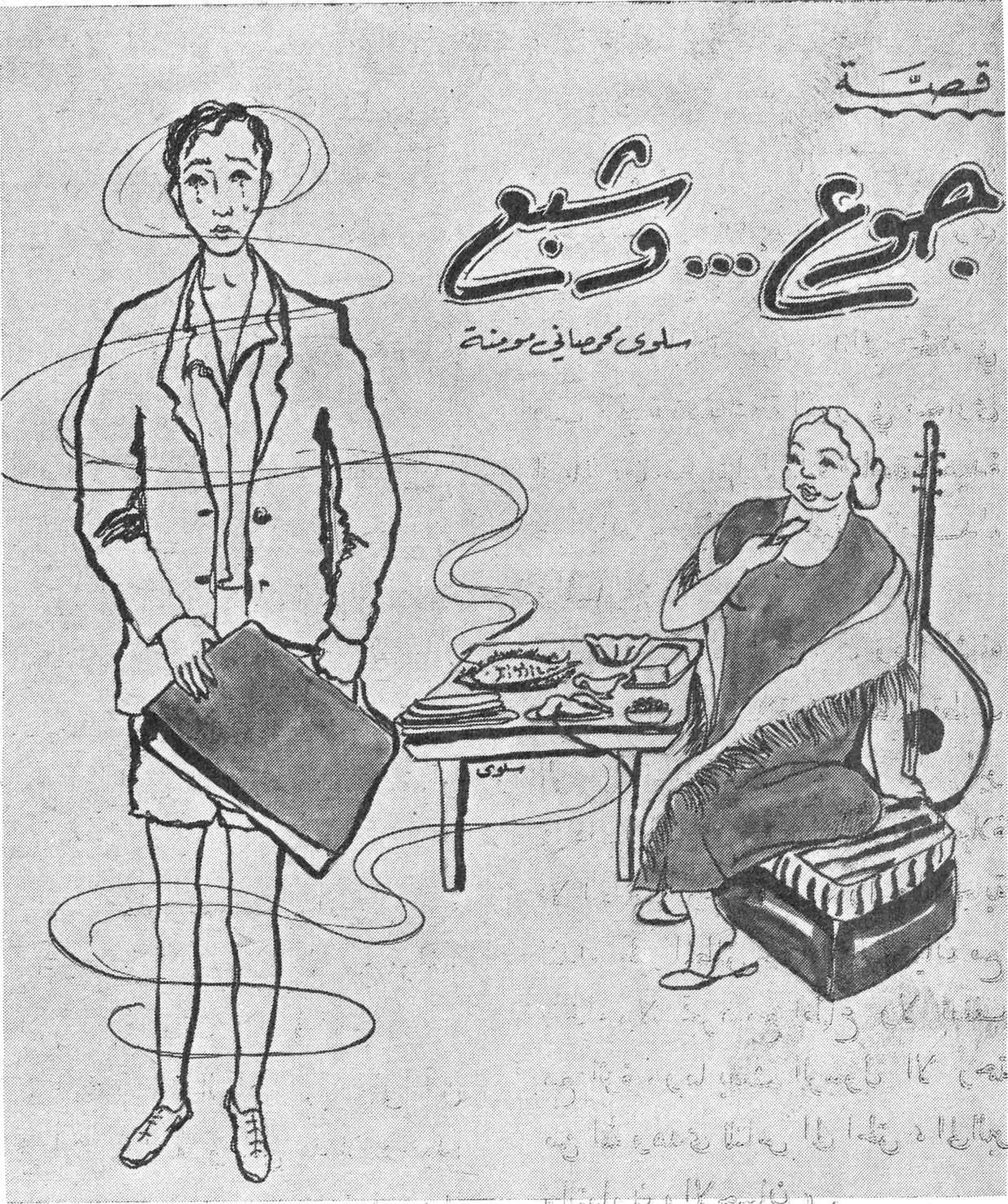
"Hunger... and Fullness" is a living example of Salwa's humane masterpieces. It is a story from her book "Along the Paths," which death did not grant our dear departed the time to finish writing.
Nadim looked about him anxiously when their relative came in with his family while they were seated at the table for supper, and there was nothing on it but a few small boiled potatoes and pieces of black bread. He saw them glancing out of the corners of their eyes at that bare table, and something showed on their faces of astonishment, and mockery, and pity. This deepened his confusion. He rose before he had eaten his food; he had no more appetite for food — rather he felt full... and sated. His mother rose too. Perhaps she had noticed what her little son noticed, and felt what he felt. She invited the visitor and his family into the reception room. Nadim sat, abashed, beside their relative's little daughter, she of the silken hair crowned with the glow of yellow wheat-ears, its long locks rippling over her back and shoulders. And he found that today he could not talk to her as he used to.
O God... how sweet were the days gone by, long ago... when they were still in their beautiful house in Palestine... His little kinswoman would follow him about so that he might show her his new toys, and feed her
the kinds of delicious sweets that were kept in the big black cupboard. But now... nothing. And what was the matter with him? Even words slipped away from him and sank into the emptiness of his soul... he could not catch hold of their reins...
The relative's stay with them was not long. It lasted about an hour, after which he rose with his family, said farewell, and departed. But what ailed the little kinswoman in the purple dress, staring into Nadim's face with shadows of reproach in her eyes? He had not yet told her about his grown-up comrades at school, and about his teachers, and his books and his games. And how eager she had been for that talk.
But with the speed of a lightning flash she answered to the pang that stirred in her little kinsman's soul. The shadow of reproach melted away, and over the sweet face there passed shades of innocent sorrow. Then she followed her parents, looking back tenderly.
Nadim did not go back to the table, nor did his mother. His six brothers and sisters had each eaten his potato and risen to do their lessons or their games. And then the mother announced to them her wish to spend the evening at the neighbor's, "Sitt Bahia." The children took turns going with her on such evening visits, and tonight it was the turn of Nadim, third among his brothers and sisters, to accompany her.
Nadim was glad to go with his mother to Sitt Bahia's, for she was merry and full of laughter; the neighbors often gathered at her house. She would take up the oud and weave sweet melodies upon it, and sometimes sing in a tender voice, while those present clapped or joined her in some verses of song — and