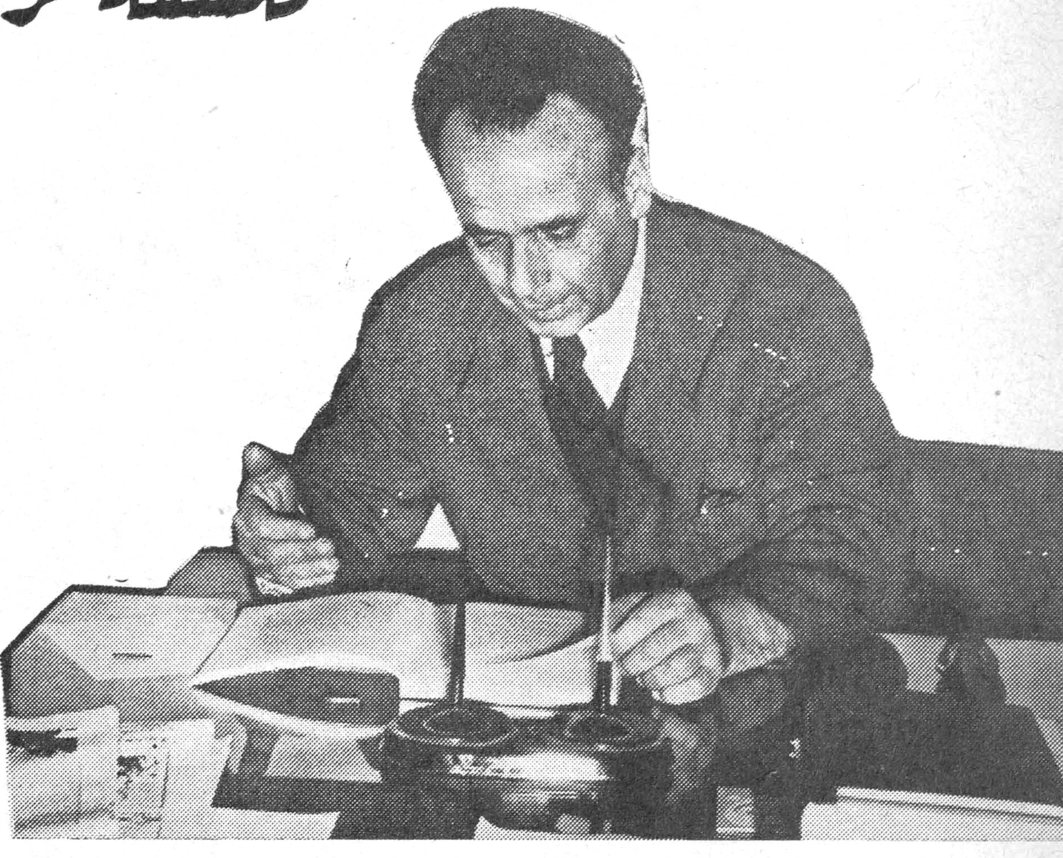
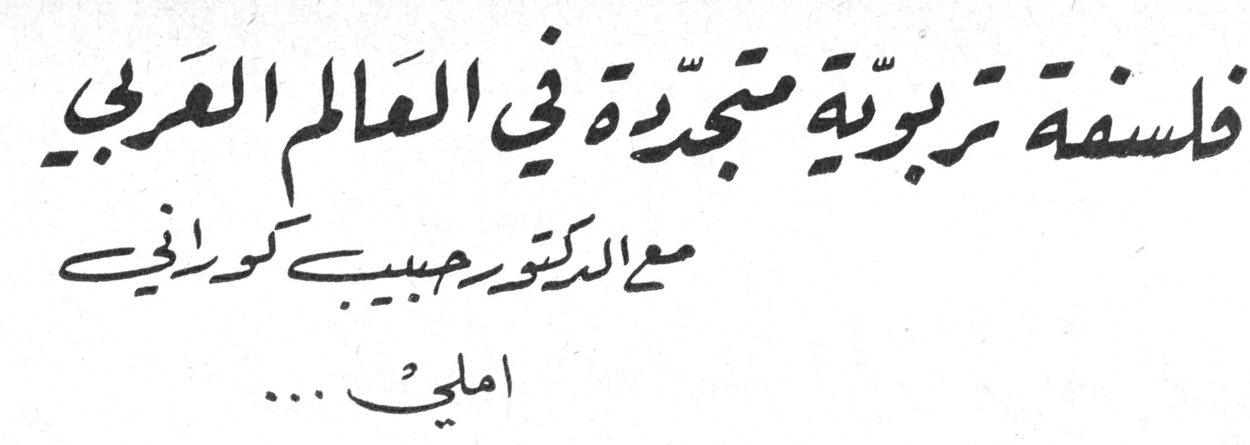
With Dr. Habib Kurani
"That was my first year of school, and I was exceedingly fond of school, despite the mystery and fog that surrounded me there — some of it embodied in strange words the teacher would pronounce before us and ask us to repeat, or in theories of spelling and grammar rules, or the names of the cities of China and Japan... Among these obscure names was the name of 'the inspector'... I never once dared to ask what this inspector might be like, but I drew a picture of him in my imagination, out of the sum of my school experiences: I pictured him a man of huge build, wearing spectacles befitting his station, and a white gown which he would take off once the round of inspection was over — that is, I drew him in the image of the doctor who used to terrify me with painful needles during my illness with typhoid fever... And so, no sooner had I heard that his honor the inspector was coming to the school that morning than I took to my heels and ran off screaming and wailing, to take shelter in my mother's arms... My teacher at the time had prepared this atmosphere of terror and alarm for us, for she used to pursue us at our work with constant threats, coupled with the name of the honorable inspector; nor will I hide that our terror was but a small part of the poor woman's own terror and her fear for herself and for the shaking of her official chair."
This incident, told me by an educated friend, came back to me as I leafed through a recent book put out by some of the leaders of education in the Arab world today, at one of the study seminars which the Department of Education at the American University of Beirut is accustomed to hold, under the title
"A Renewed Educational Philosophy for a Renewing World"... And I knew that there was a man behind this driving movement of renewal, and of reconsidering the education of our children... The man is Dr. Habib Kurani, head of the Department of Education at that university.
In a quiet sitting, Dr. Kurani began to speak of education in its modern conception, and in its relation to Lebanese society in particular and the Arab world in general. He said:
The aim of modern educational philosophy is to prepare the good, productive citizen, who knows how to live and settle in his surroundings, and to have an effective hand in changing and building those surroundings... In Lebanon, we need a solid educational foundation, whose object is the development of strong character and constant renewal, to keep pace with the caravan forever moving forward, thanks to the ease of communications and the shortening of distances.
Among the most important duties of educators is reconciling our old heritage with the demands of the present age; hence Lebanon's mission in the field of education is very important: its aim is peace, and the drawing together of conflicting views.
Modern educational philosophy concerns itself with forming the child's personality, and knowledge is only a means to that end. That is why we need the good teacher, who is himself a person of strong personality, good spirit, and wide knowledge of his field and of the psychology of the child in his hands.
And our youth... where do they stand today?
Dr. Kurani holds that these young people are taken with the dazzling appearances of modern civilization, enjoying the fruit of science without having had a hand in creating it. It is very important, then, that these youth understand the scientific spirit behind these appearances — that is, the honest, truthful spirit that faces the truth whether it be for it or against it. The elements of this spirit are work, discipline, and precision. Yet this does not dispense the young from the unifying human spirit, which says that men are brothers, and God is for all... This last is the fruit of our country, and the apostles of this country — we gave it as a gift to the world; and in this decisive hour we need it, that