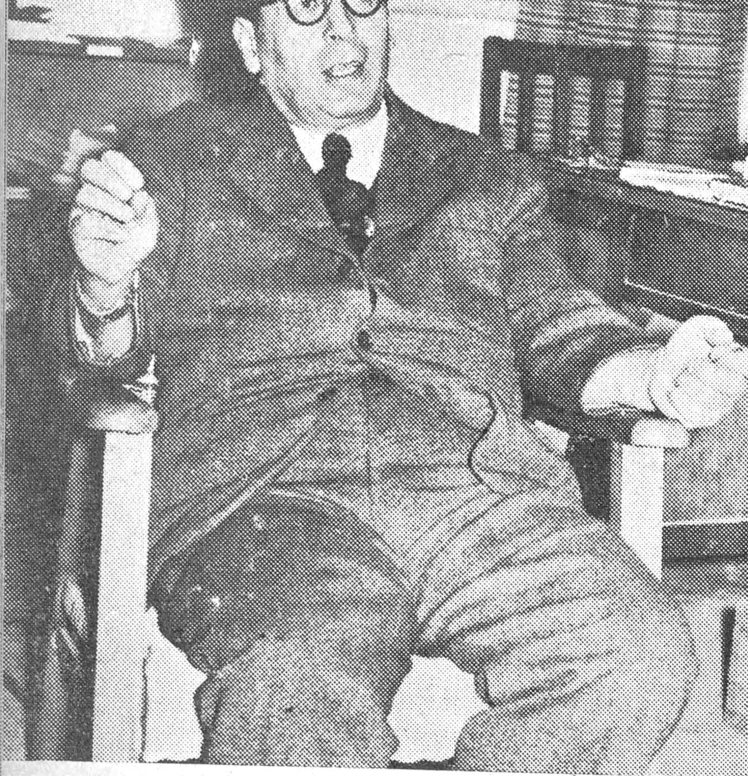
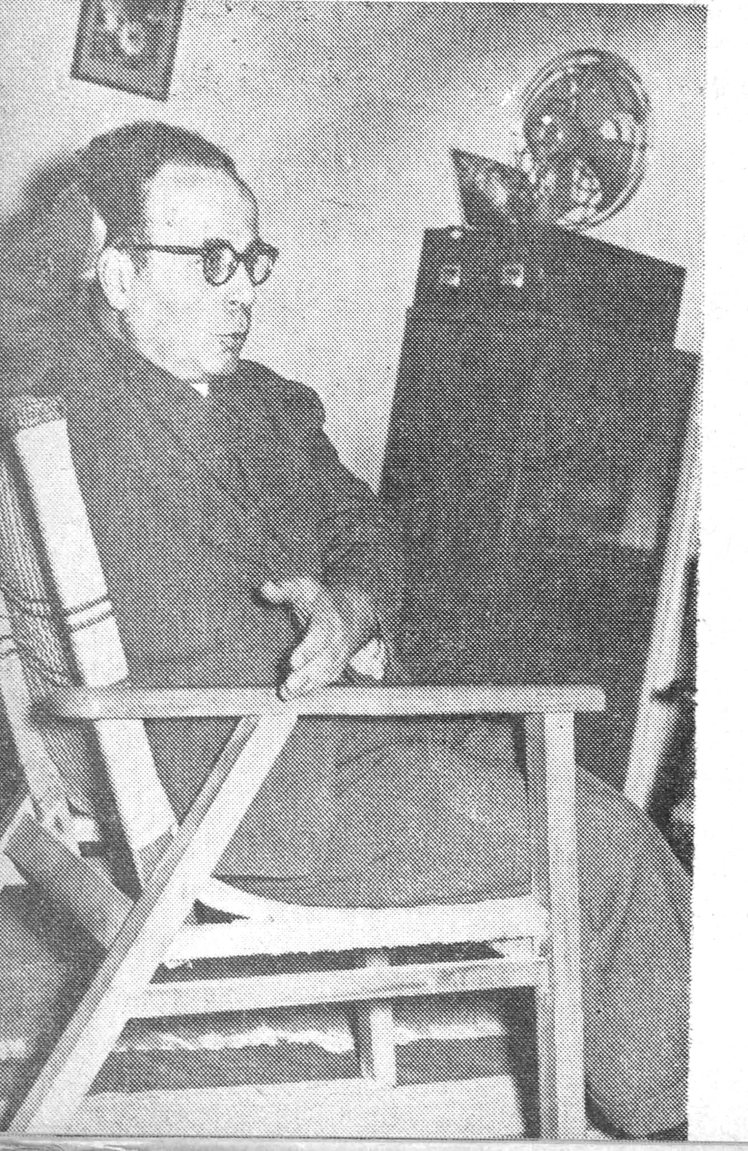
it may walk hand in hand with its sister, the scientific spirit...
What is in the schools of Lebanon?
In Lebanon we have two kinds of schools: public and private... And Dr. Kurani believes that our country needs both kinds,
which can be reconciled and brought together, if the mission is one and the aim common, directed toward building, and good, and love... But this did not prevent him from declaring that education in Lebanon in particular turns in an empty circle and moves along the margin of reality, because it relies on theoretical information, preparing students for examinations whose matter is far from the reality of life; while the young face vital, basic problems — moral, scientific, and material... It is the duty of those responsible, then, to create an educational philosophy that brings education closer to the demands of life. This is a step of recent date: it did not exist even in Europe until a quarter of a century ago. In Dr. Kurani's view, we need it more than the West does, because our society is developing rapidly and our problems are harder; and this means that we are not a backward nation, for our development is moving at top speed.
Alongside this philosophy, what is required is a good, trained teacher, for the worst curriculum gives a good result if it is taken up by wise, devoted hands. The third step is the centralization of education; modern education directs the rising generation toward creation and invention, and believes in the necessity of interaction between school and society. The good teacher, together with a flexible central administration and a philosophy that penetrates all vital educational work, is enough to give Lebanon and the Arab world a brilliant future; for our students are intelligent, and show a sweet
superiority as well...
Our need for training
In order to bring our educational reality to a satisfactory level, Dr. Kurani sees that we need more trained experts in every field, who understand the modern philosophy we need and work by it faithfully. Among these are the inspectors, whose work is sincere guidance and honest direction, not the spreading of terror and intimidation among the ranks of teachers and students... Then come experts in the various professions; and this kind of study is not confined to the school but goes beyond it to the workplace, where the student applies the theories he reads in the book. Models of these workshops exist today in Russia, and in some of the European countries advanced in industry.
Coeducation
Dr. Kurani favors this in principle, for he sees in it a sound direction for both sexes; but he also sees that coeducation of the sexes depends on the country's social readiness for it, so that there be no gulf between school and society, throwing students and parents into perplexity and confusion... Lebanon has become ready for this kind of education, because woman there has gone down into the field of work; whereas coeducation can be introduced only into the elementary classes in a country where woman still does not share with man in society.
Nursery classes
Among the most important duties of the government is to extend elementary education to all the population. As for the kindergarten, it was created when woman went out to work: it is a place of solace and play, where children spend their time... Modern psychology has shown that the ages of three to five are the foundation on which
The aim of modern educational philosophy is to prepare the good, productive citizen
personality is built, and the best one to do that building is the mother; but this does not negate the idea that the child must needs meet with his fellows.
Finally, Dr. Kurani believes that Lebanon, despite certain shortcomings, has covered a long stretch in the field of education and instruction — and this statement cannot be understood unless we go back several years, to the pages of history!
Education in Lebanon has advanced by long strides