At the beginning of last February, following a large meeting of the League of Lebanese Women's Organizations, the president, Mrs. Laure Tabet, submitted this statement to His Excellency the President of the Republic, His Excellency the Speaker of the Chamber of Deputies, His Excellency the Prime Minister, and Their Excellencies the Ministers of Justice, National Education, and Social Affairs.
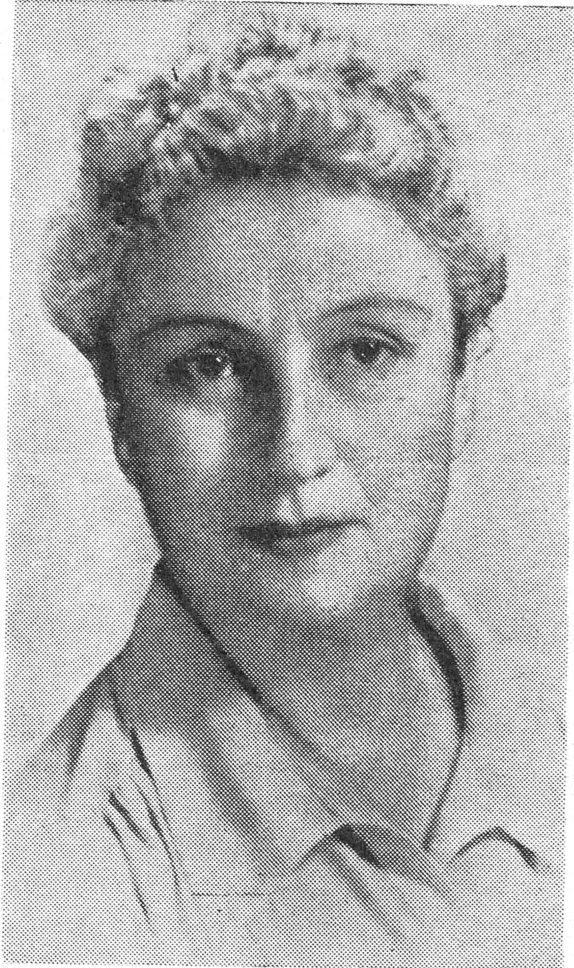
Mrs. Laure Tabet
In the face of this moral collapse in which Lebanon is floundering, the Lebanese woman grieves, closes her ranks, and holds meetings for swift and decisive action to combat the disease of prostitution and stamp it out.
And woman knows that her refuge is the President of the country, who acknowledged her right, respected her, and made her feel that she is a citizen bearing the same duties as man and holding the same rights as he.
Therefore the Lebanese woman comes before His Excellency the President of the Republic, His Excellency the Speaker of the Chamber of Deputies, His Excellency the Prime Minister, and Their Excellencies the Ministers — all of whom are jealous for this country's reputation and the level of its morals — with the following demands, hoping for their fulfillment at the earliest possible time, for the rising generation in Lebanon stands on the brink of an abyss, and we are all responsible for the rising generation in Lebanon:
(1) Appealing to the government to prosecute male procurers as it does procuresses; to make man and woman equal in the penalties relating to prostitution and vice; and to be stringent in applying the law to both sexes.
(2) Firmly demanding that the government implement Articles 2, 3, and 4 of Resolution No. 266, issued on July 24, 1956 by the Municipal Council of Beirut and ratified by the Ministry of the Interior — the articles concerning the cessation of granting or renewing licenses to houses of prostitution or to women applying for registration in houses of prostitution.
(3) Rigor in exposing everyone connected with the flouting of the law, and punishing all of them with severity and firmness.
(4) Rigor in combating clandestine prostitution; establishing houses of instruction and reform for penitent women; and helping any woman who has practiced prostitution to make her life anew.
(5) Rigor in supervising the employment offices and in supervising all hotels.
(6) Demanding passage of the bill submitted some two years ago concerning the supervision of films and the barring of minors from viewing certain of them.
(7) Demanding the creation of a corps of women police, after the example of England and Belgium, or a corps of women social workers bearing a government badge, to work in the department of the protection of morals.
For more than ten years now, the Women's Committee for Prison Reform has been studying the condition of prisoners, men and women alike, and submitting one petition after another demanding basic reforms, especially in what concerns women and juveniles.
This question was raised on a broad scale by the committee's energetic president, Mrs. Adelette Richani, at the general meeting convened by the Lebanese Women's League early last February at the Cénacle Libanais — an event reported elsewhere in these pages. The women were roused with enthusiasm, and a number of names were enrolled to join the committee working in this cause.
reportage with Captain Harakeh
In the wake of the stir raised around this question, three of our distinguished deputies paid a visit to the prisons and to their inspector, Captain Youssef Harakeh. One of them, Mr. Edouard Honein, drew up a detailed report of what they had seen and heard and presented it to Lebanese public opinion at a press conference; the report was published in a number of newspapers.
And since the question of the prisons is among the most vital questions of concern to woman — especially in what touches women and children — "The Woman's Voice" promises its readers a reportage, to appear in the next issue, with the prison inspector himself, Captain Youssef Harakeh, who has kindly promised us to make new statements on prison reform.
Until the next issue, then.
In the next issue: A detailed