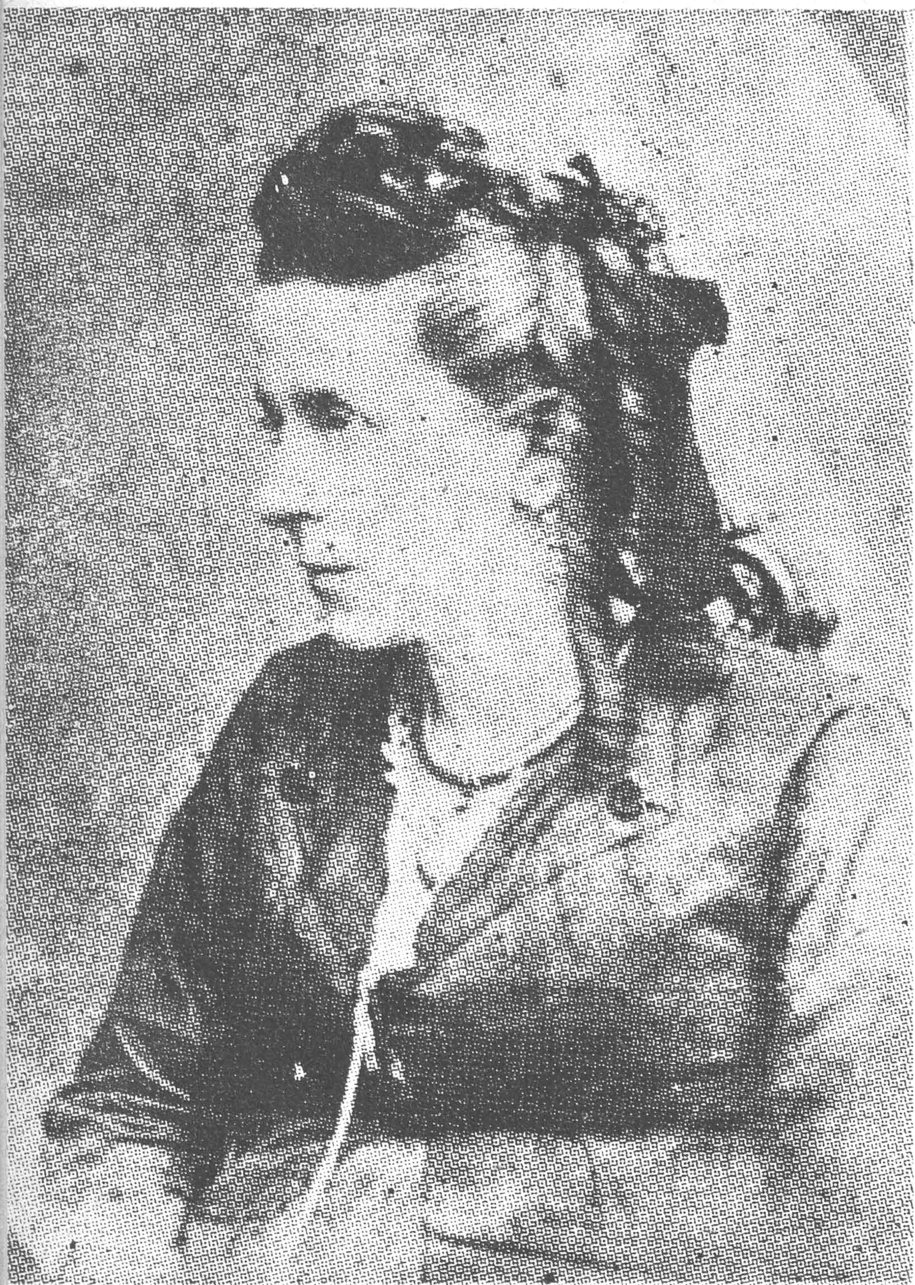


Few are the reports that have reached us about Mariana Marrash (*), even though she was the woman of letters of her age. For the intellectual and literary movement in Aleppo was, during the Hamidian era, stifled, unable to break free or express itself openly; and so the fame of the luminaries who shone in that period — I mean the second half of the nineteenth century — remained confined within narrow literary circles, whose heroes would meet in the salon of one of their number, reciting poetry to one another and exchanging talk and witticisms; and whenever their conversation strayed into political news, it turned to whispers wrapped in caution and dread.
In this stifled atmosphere Mariana Marrash grew up, and in her old and distinguished home study and learning were within her reach, between a father and two brothers who were among Aleppo's prominent philologists and poets. When they perceived in her that burning native intelligence, they sent her
to Beirut to complete her studies.
She threw herself upon the books of thought and letters, drinking from them with the appetite of a hungry man who knows no satiety; then she turned to the masters of Arabic poetry, memorizing the best of their production, above all Umar ibn al-Farid and Umar ibn Abi Rabi'a, and these two great love poets left their mark upon her feeling, sensitive poet's soul. Nor was she content with this measure of reading in the poetry of the heart: she turned to the poets of French — a language she had mastered — and among them grew fond of the poetry of Lamartine and de Musset, for she found within herself a warm response to their tender, delicate sentiments.
* * *
Mariana returned to Aleppo, her girlhood having blossomed into fresh, bright-faced youth and into an attractive personality adorned by wit, polish, and culture, together with an inclination to music that showed itself in her accomplished playing of the qanun. It was not long before the elite of
Aleppo's men of letters and thought took notice of these rare qualities, all gathered in one refined and beautiful young woman — at a time when acquiring learning and defying tradition were hard even for men. It was natural that the men of letters should be drawn to her and gather around her, in her salon, in her father's house; and thus Mariana became the focus of every eye, and the luminaries of the age flocked to her gatherings — men such as Rizqallah Hassoun, Abd al-Rahman al-Kawakibi, Jibra'il al-Dallal, Sheikh Kamil al-Ghazzi, Qustaki al-Himsi, and others... Thus her salon became the meeting place of the people of letters, and it was perhaps the first literary salon the Arab East had known: delightful sessions were held, the evening gatherings ran long, and the conversation grew sweet and pleasant, in a genial atmosphere of poetry and music.
In our modern history we have known examples of literary salons
(*) This article was written by Edvick Jureidini
Shayboub, drawing her information from a study of the Aleppine poetess that appeared in the magazine al-Hadith, whose proprietor is Mr. Sami al-Kayyali.
fostered by ladies of leisure and gifted women