
For two months and more, an outcry has been raised in Beirut out of zeal over the fate to which the prisons in Lebanon have come, and out of concern for the reform that is sought. The campaign began with the report submitted by the three deputies — Edouard Honein, Raymond Eddé, and Mounir Abou Fadel — after a visit they made to al-Raml Prison.
On another front, the "Committee for the Improvement of Prisons," headed by Mrs. Adlette Richani, continues to hold its meetings, now at the home of the president, now at the home of Mrs. Nadia al-Mouna or of Madame Tawfiq Moufarrej, with an elite group of ladies fired with enthusiasm for the cause. They paid a visit to His Excellency the Minister of Health, Mr. Albert Moukheiber, demanding an improvement in health conditions, particularly in the women's and children's prison; they also called on Emir Abdel Aziz Chehab, Director General of the Interior, and presented their demands for the improvement of the prisons and the supervision of motion-picture films.
The ladies' efforts joined with those of the inspector of prisons, Captain Youssef al-Haraka, and it became clear that the ideal final solution can come only through the building of a new prison provided with every requirement of health, with workshops, factories, schools, playgrounds, houses of preaching and guidance, and recreation halls.
To carry out this vital and important project, Captain Haraka, together with the committee
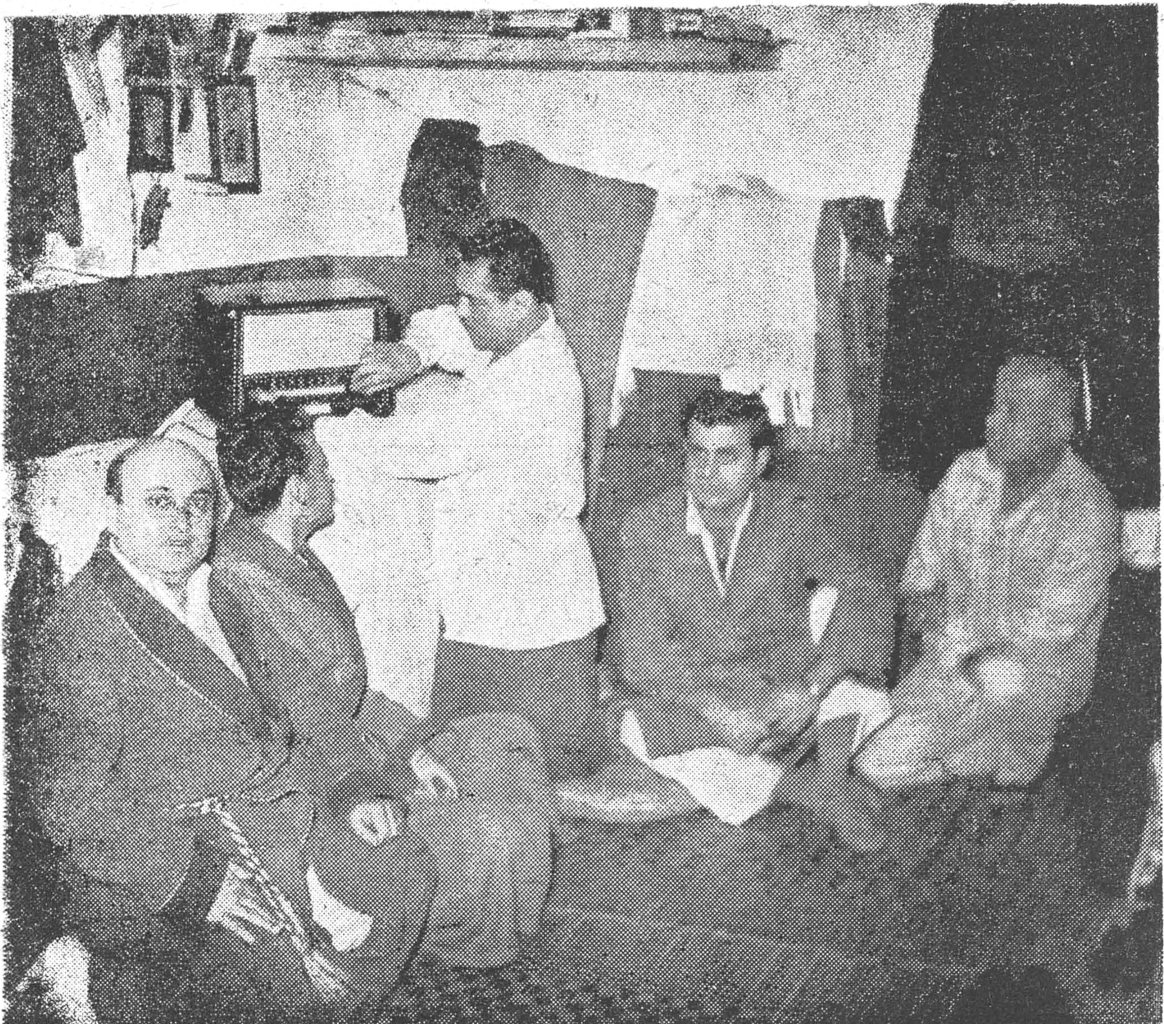
Inside the room, the prisoners listen to the radio

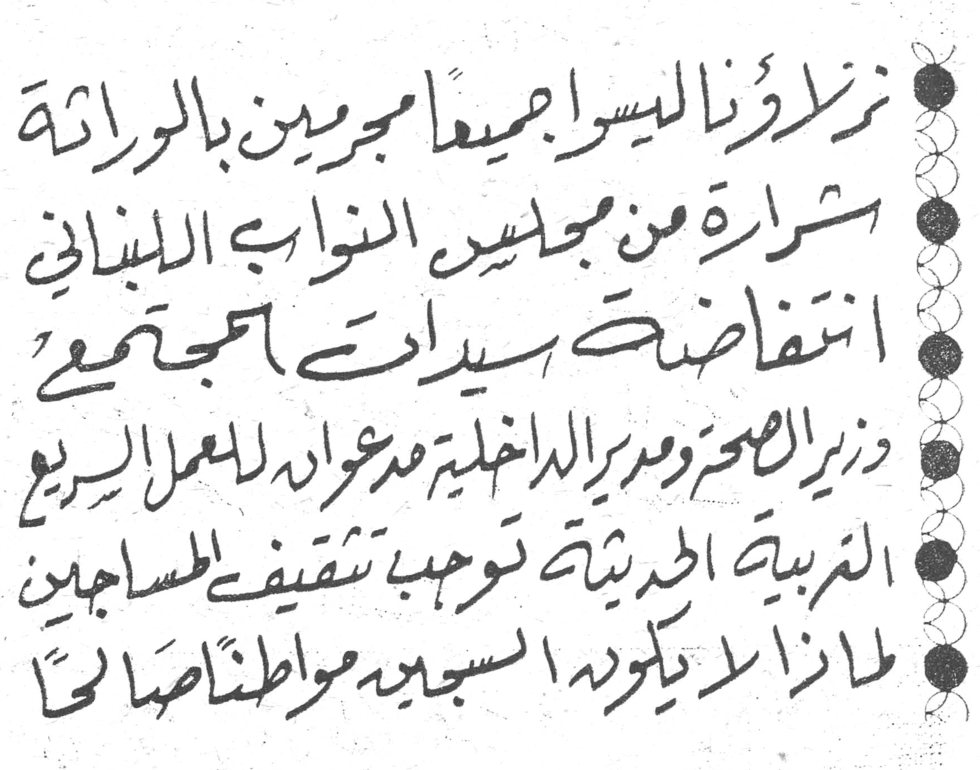
• Our inmates are not all criminals by heredity
• From a spark struck in the Lebanese Chamber of Deputies
• The ladies of society have risen up
• The Minister of Health and the Director of the Interior are called upon to act quickly
• Modern education requires the instruction of prisoners
• Why should the prisoner not be a good citizen
of experts and engineers, was chosen to appraise the properties on which the prisons stand, in preparation for selling them and building a new prison with the proceeds.
The causes of crime go no further than these: poverty, ignorance, and disease.
"The Woman's Voice" had promised its readers a talk on the prisons from Captain Haraka, and our request happened to come while he was preparing an absorbing book, soon to be published, which treats important subjects in strengthening the general relations and bonds between the people and the men of public security. He kindly let us see some chapters of his book "With the People," from which we have excerpted part of this chapter, which concerns prisoners. We shall also publish another chapter, on combating juvenile crime, in the next issue.
The Modern Conception of the Prison
Gone is the time when we looked upon the criminal as an aberrant creature who must be cast out of our society and confined within four walls for retribution and revenge — this out of a desire to execute the letter of the law,
to make a show of social justice, and to