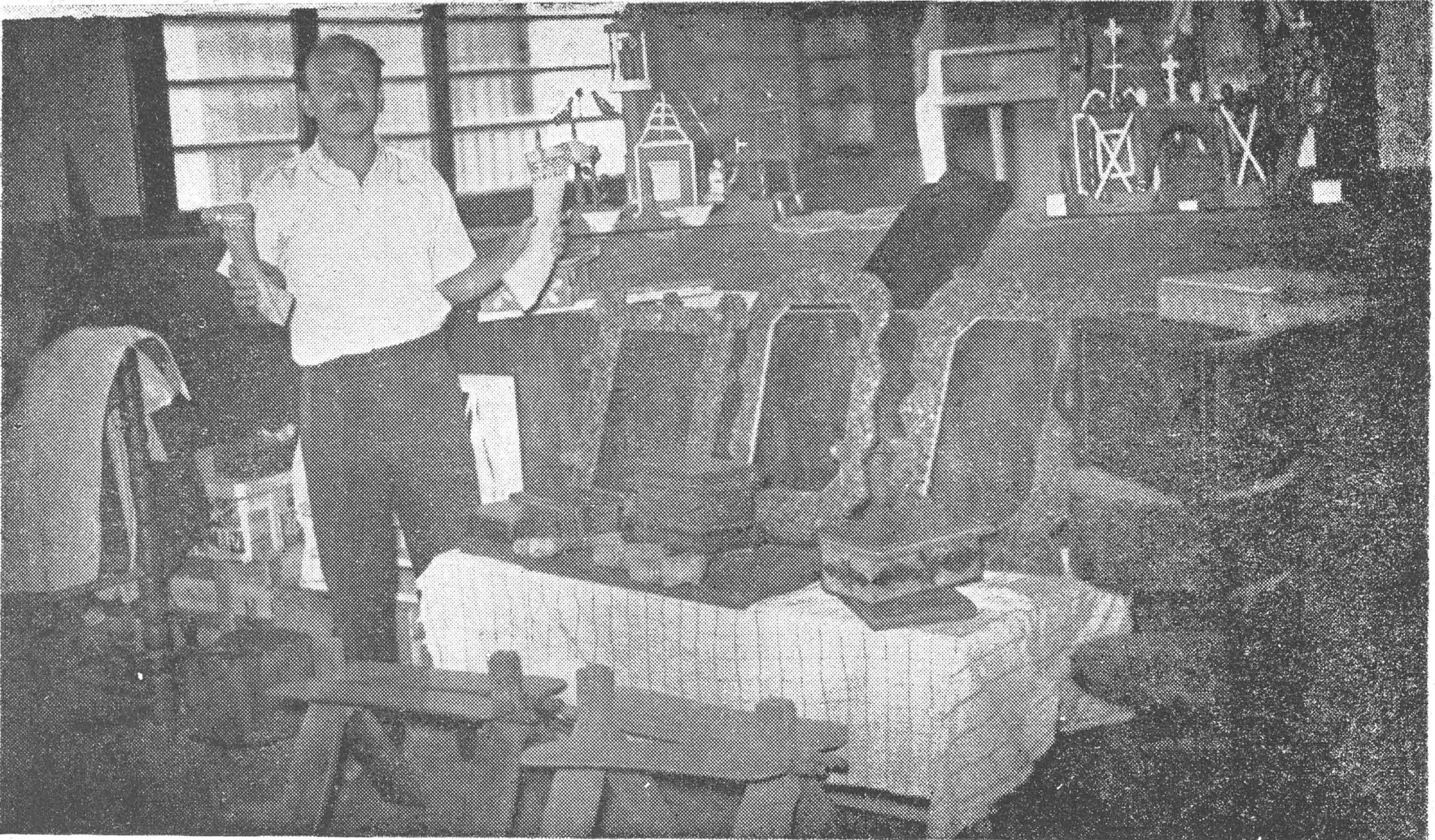
One of the prisoners, inside the factory, displays his handiwork
satisfy those members of society who had been wronged.
The prison is no longer a place of retribution, a source of contempt for the citizen, a squanderer of his human character.
In other words, the prison must no longer be a school of corruption, or a mine [...] in inculcating the arts of crime, or a wellspring for teaching the varieties of ignorance and vice, or a training ground in the colors of thievery.
As for that band of ill-starred citizens who have strayed from the straight path, violated the sanctity of the laws and statutes, and ended in the darkness of the prisons — it is neither lawful, nor just, nor in keeping with common usage, that we should give up hope of their reform and of straightening their crookedness so as to make good citizens of them. So long as it is among our duties to guard the prisons and oversee the confinement
of these inmates' liberty until the terms they spend in our precincts come to an end, we must strive earnestly to return them to the fold of society as good citizens.
The reform of the criminal, like the teaching of the ignorant, is a duty of the utmost importance, for the correction of criminals and delinquents within the prisons differs in nothing from the instruction of pupils within the schools: the latter are schools of teaching and guidance, and the former are institutes of reform and correction. If the men of public security fall short in straightening the crookedness of the prisoners, society will go on complaining of corruption, and the men of public security will go on struggling to no avail.
The State's Responsibility
The modern theory in the science of imprisonment holds today that
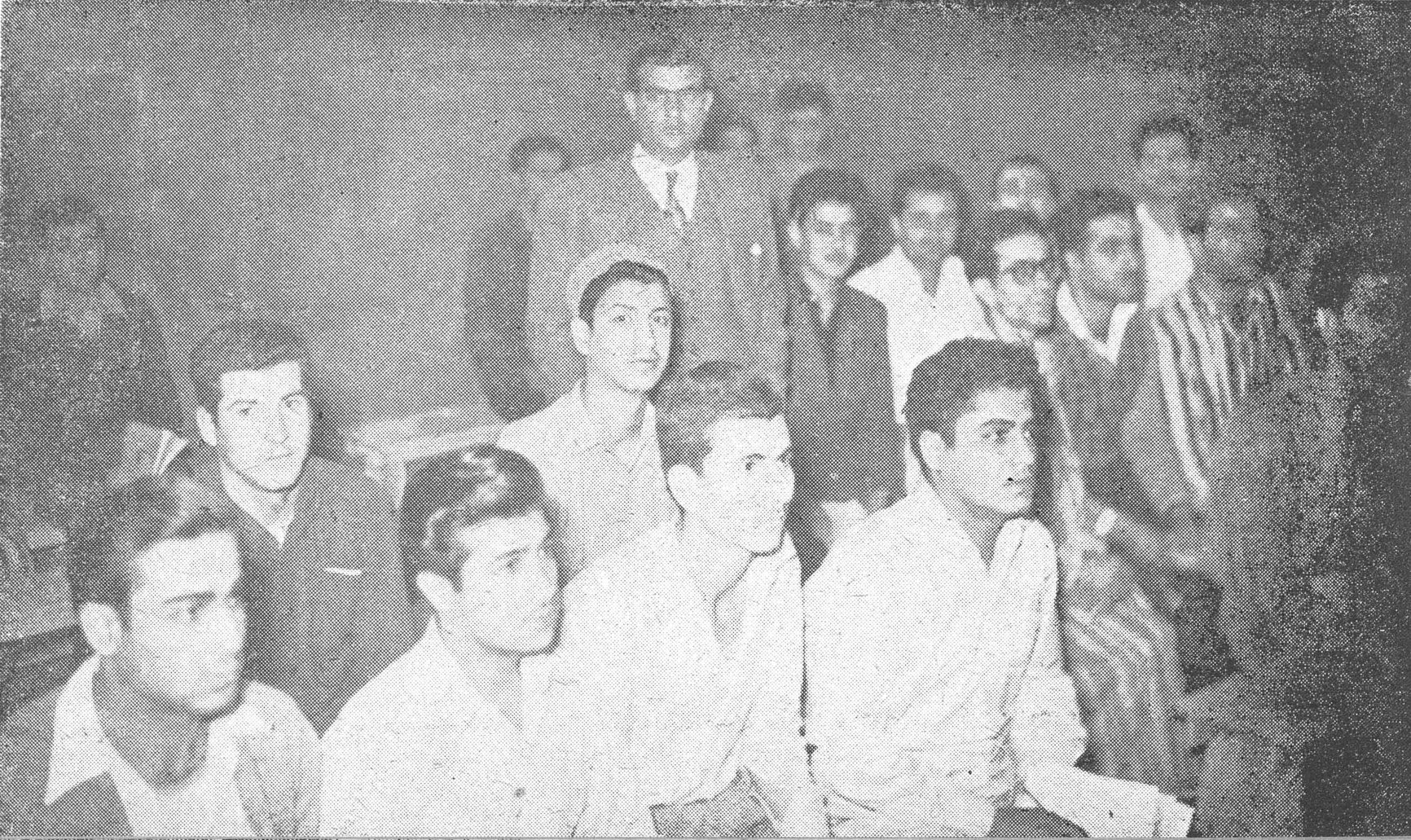
Mr. Sami Chaya, delegate of the Ministry of National Education, with his pupils during a lesson.