
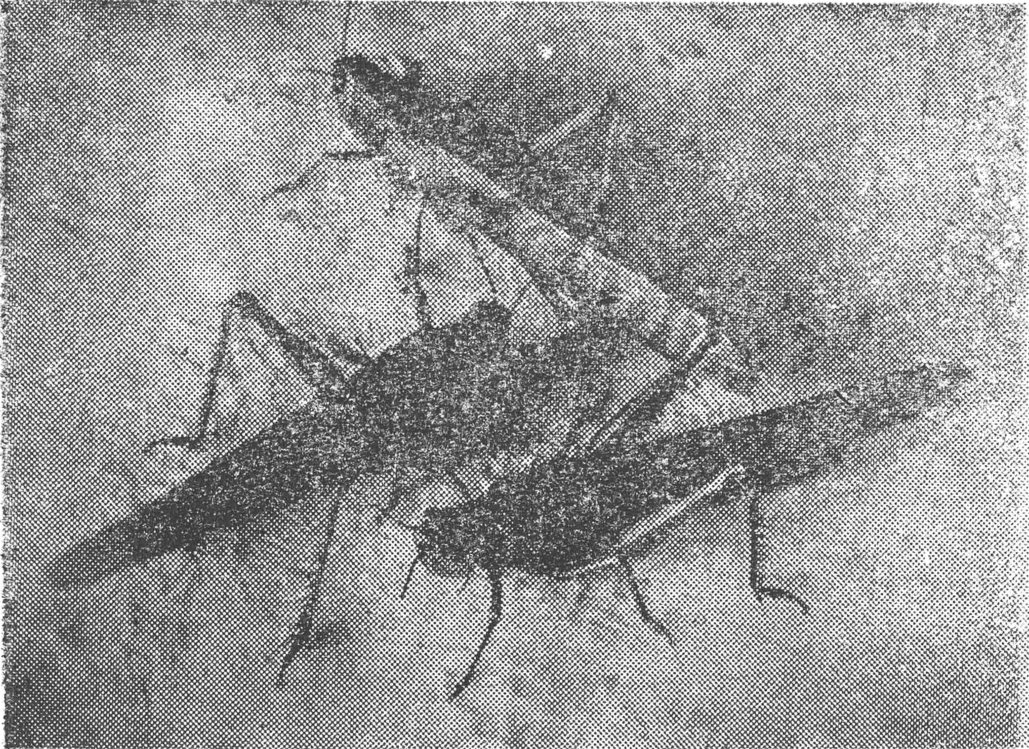
Locusts are counted among the most voracious of insects and the deadliest to crops of every kind; their mere appearance in any country has always meant, and still means, the specter of calamity and poverty looming over it.
How many times, in history ancient and modern, have locusts been the cause of famine for many peoples.
Locusts are of many kinds, the most notable for us being the Najdi (yellow) locust, which is found in its natural home (the deserts of Africa — the Sudan, the south of the Arabian Peninsula), whence it moves from time to time until it invades the northern Arab countries, Iran and Turkey.
As for the fight against the locust, it has been regarded in all the countries of the world as a national duty, and so we see everyone, when the locusts
appear, rising up — men, women and children — alongside the responsible specialized departments to perform this duty.
This fight was in its beginnings a primitive, rudimentary operation, confined to gathering the locusts and destroying them, and plowing the ground to destroy their eggs, or driving them from the fields on which they alighted, to prevent them from laying their eggs there and ravaging the crops; and woman played an important part beside man in this field.
Today, however, the methods of the fight have advanced, thanks to the progress of science, which has placed at our disposal effective preparations and excellent equipment for the fight, so that it has today become a swift, fruitful operation, inspiring reassurance and peace of mind.
What has increased the effectiveness of this fight — contrary to what used to happen in the past — is the cooperation existing today among the states exposed to the locust peril. This cooperation concerns itself with the holding of regional locust conferences to study the effective methods of control, with the exchange of information, and with actual participation in the control operations in the first regions where the locust swarms appear. This cooperation, now closely established among the countries of the Middle
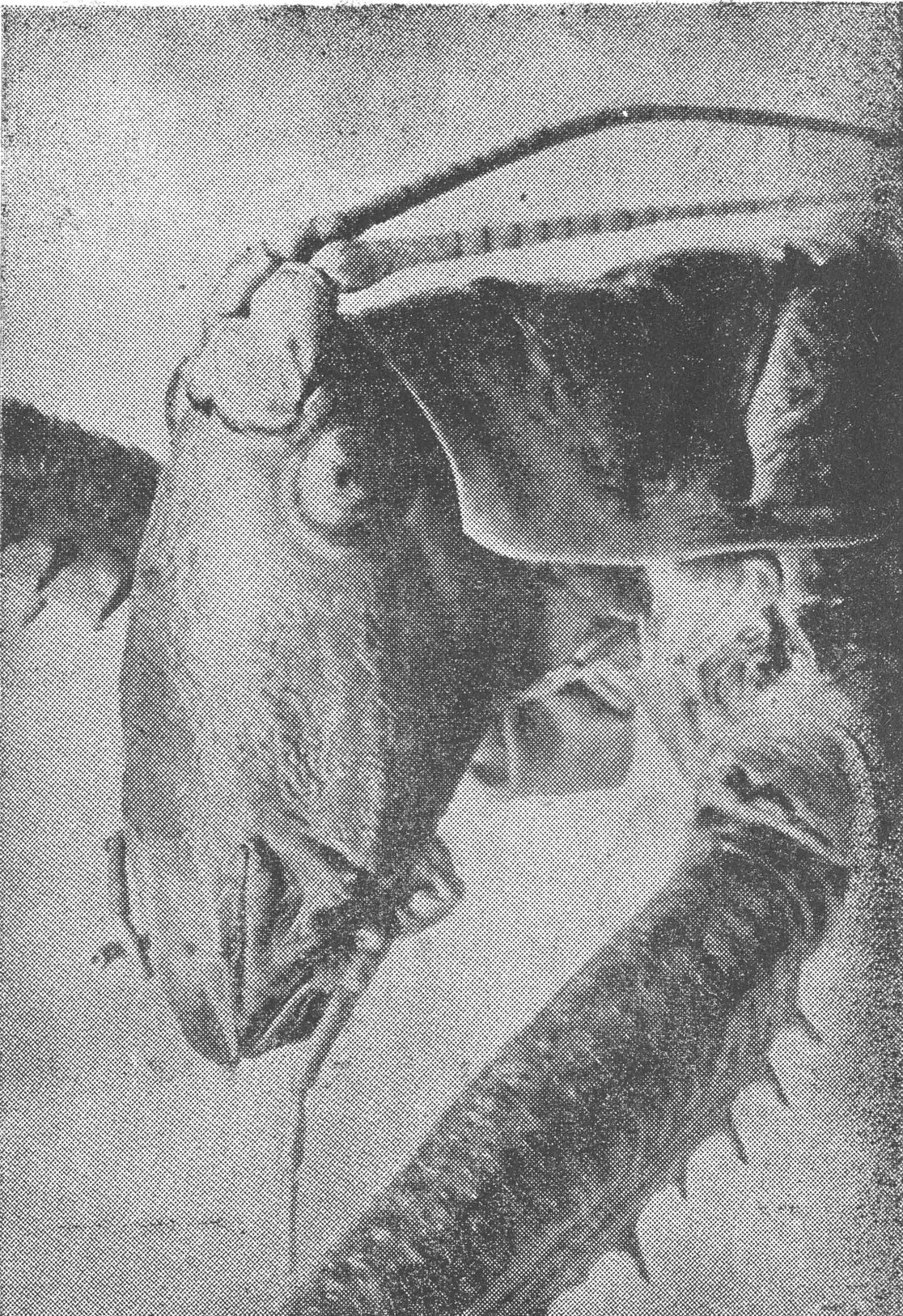
This is a picture of a locust's head, magnified 100 times its natural size!