Practicing Medicine in Beirut for a Quarter Century
The battle and the struggle begin:
In Marseilles Saniyya found herself compelled to lift her veil. She felt fear for the first time, and fear weakened her resolve; for a moment it seemed to her that she had committed a grave error, and she surrendered to weeping and tears for three days running — from which she emerged with a clearer mind; her faith came back to her, and she braced her will anew to face the destiny she herself had traced and had chosen of her own full will...
And the obstacles began to collapse before her, for she found herself in America the object of everyone's interest and care. While she was at Wilson College, aid and free scholarships poured in upon her, and she paid her fees from the wages she earned for extra work, talks, and the like.
Founding her clinic in Beirut:
After a struggle of seven unbroken years, in which she knew neither rest nor truce, she returned to Beirut crowned with triumph, and set about in earnest, in the Bab Idriss district, to open a clinic. She had once more to face the rigidity of public opinion, which had not yet grown used to conceding to woman — above all the Muslim woman — the right to practice the profession of medicine! The confidence of her fellow citizens in her, particularly the men, was weak. They began putting it about that she was a "midwife," not a doctor. She had to win that confidence by proofs and by work... and before long she succeeded once again.
"The Dr. Saniyya Habbub Scholarship"
Patients streamed to her clinic. In the flush of victory she did not forget her school's kindness to her; rather she set aside the first handful of money she received as honest earnings to be granted to a Muslim girl studying medicine at Wilson College. And should no Muslim girl be found, the scholarship passes to a Lebanese
girl... This generous gift is still regularly in force to this very day.
After a quarter of a century:
Time has passed over these events — a quarter of a century and more! In it Dr. Saniyya has won glory both moral and material. She has never once flagged in performing her mission toward the daughters of her sex. She is a dynamic mass of vitality and activity, with a far-reaching faith in woman's gifts and in her ability to reconcile her domestic duties with a free profession that assures her her material independence and, with it, her dignity.
In an interview she gave in 1937 to the young Muhammad al-Naqqash, then a journalist, the two agreed to be companions in life. He went on along his literary and journalistic road, and she along her medical one. Among the fruits of their happy marriage
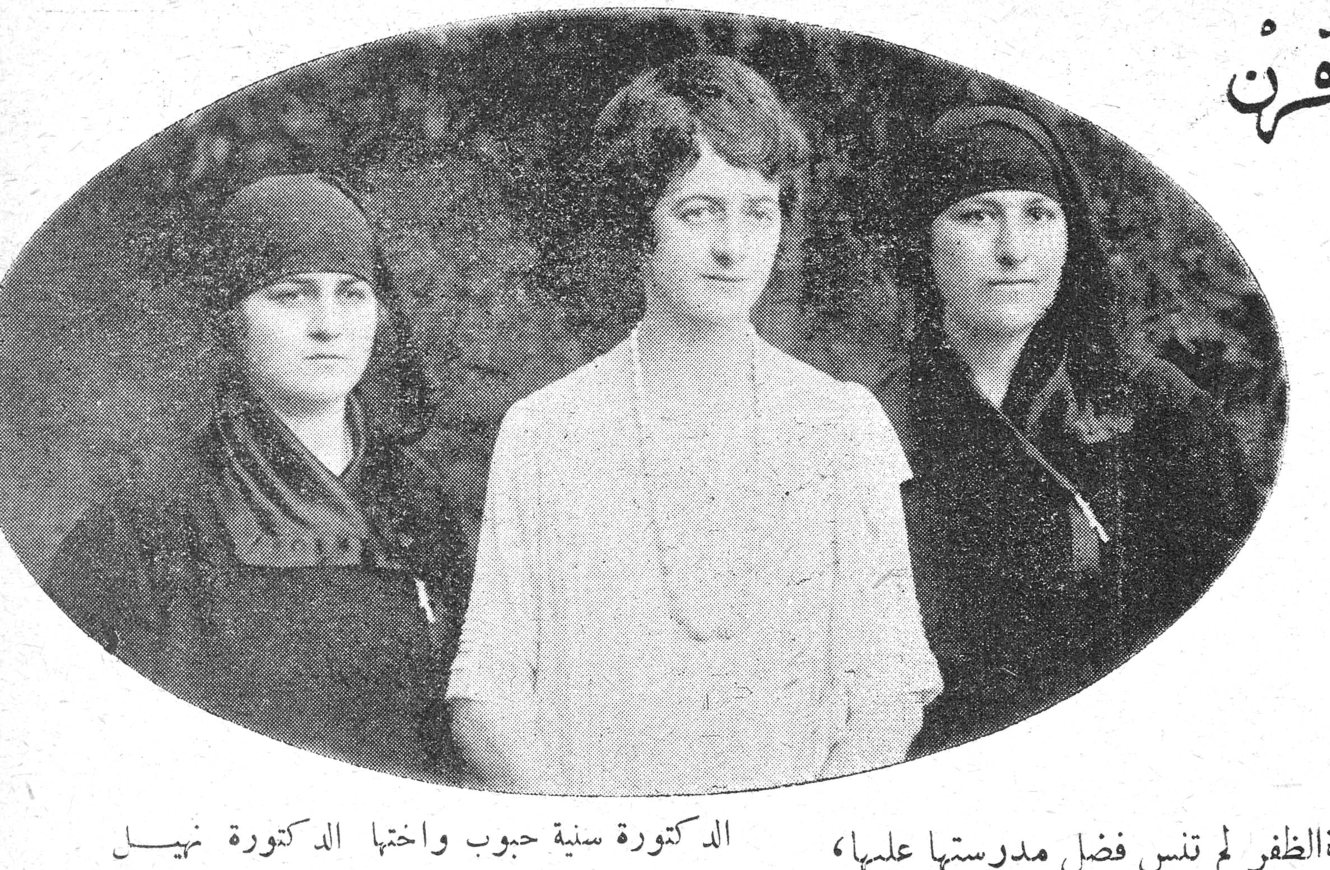
Dr. Saniyya Habbub and her sister Dr. Nahil al-Dajani, and between them her principal of blessed memory, Miss Irwin.
are Saniyya, soon a candidate for a master's degree in psychology from the American University of Beirut, and Iffat, finishing this year at the Ahliah National College. Neither has her mother's leanings toward medicine, though the younger one has her drive and the force of her enthusiasm.
Dr. Saniyya Habbub believes in deeds, not words. She is a housewife and "mother" before "doctor," and boasts that she is the absolute mistress of her kitchen... However far she advances in years, she will remain for the daughters of her sex an example to be followed, and one of the first pioneers on the road to woman's emancipation and material independence.
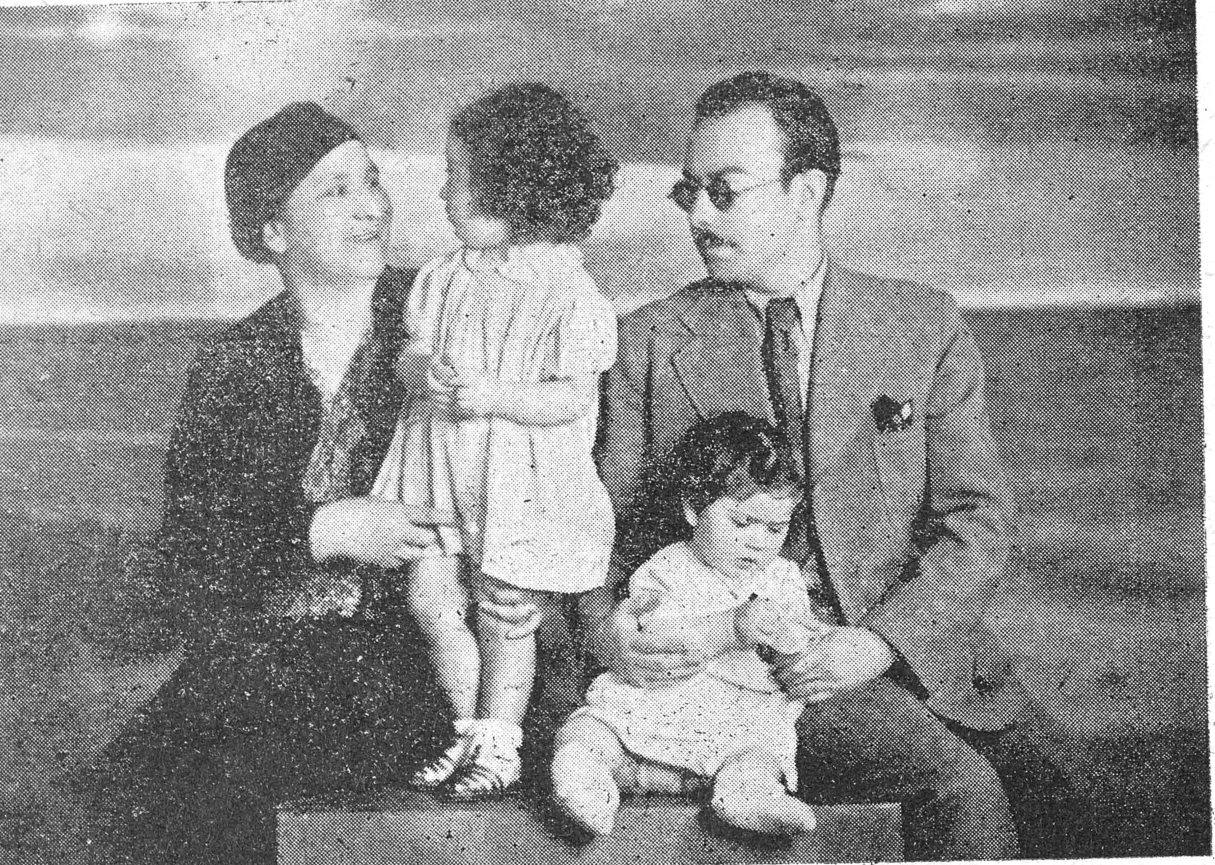
Dr. Saniyya Habbub in 1941 with her husband Mr. Muhammad al-Naqqash and her daughters Saniyya and Iffat.