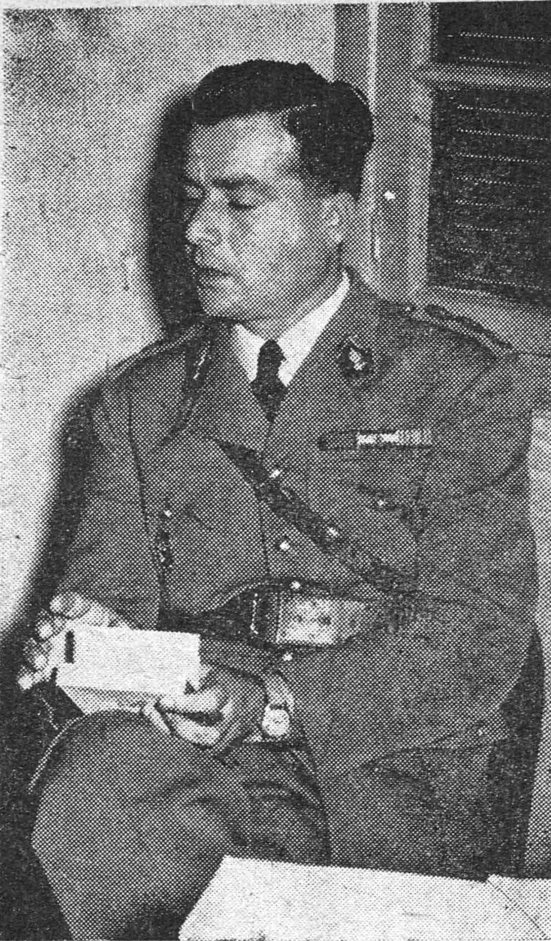
Security men suffer from a social and professional problem: the public's failure to respond to them in the enforcement of laws and regulations. This estrangement between the people and the security men has been treated for the first time by Lieutenant Colonel Youssef Harakeh in a book soon to appear in Arabic among the publications of the Dar al-Hayat bookshop. The Woman's Voice magazine wished to obtain an important chapter of this book, dealing with the treatment of juveniles, their supervision, and the straightening of their crooked ways by the men of the security forces.
Sons walk in the footsteps of fathers, and the young imitate what they see of the deeds of their elders. When our children grow up far from the security man, knowing nothing of his duties, seeing nothing but the yellow uniform he wears, which strikes dread and fear into their souls, the bonds between the two sides remain missing.
It is self-evident that whatever frightens is hated; and so the security man, if he is remote from children, becomes a frightening and hated symbol, and children grow up bearing him a grudge. It is therefore necessary that our
children grow up acquainted with the duties imposed upon security men and the work they do to preserve public safety—and their own safety in particular, since children do not understand the means of self-protection or how to avoid the accidents that bring harm.
It is the duty of the security men, who perform many tasks to safeguard the lives of juveniles and preserve their safety, to make them appreciate their work and to win their love and respect from their tenderest years.
The child of today is the one who realizes that the security man is he who helps children across the streets and wards off from them the harm of the reckless driver; it is he who preserves the safety of roads and communications, and prevents thieves, vagabonds, and criminals from carrying out deeds that injure the public safety.
Children must know that the security man is a good citizen who spends great efforts for their happiness and comfort, and that when he is the head of a family, that family endures much deprivation for the sake of defending their safety. How many a time, on many a holiday, the children of a security man cannot see their father's face, because he is away preserving the comfort of other children.
The security man is much exposed to sacrificing his comfort, his happiness, and his very life for
the sake of others. Sure, pure love and sincere affection—these we must win from the hearts of these young ones, hearts that know nothing but faithfulness in affection and fellowship.
The children of today are the young men of tomorrow; they grow up to love us and to lighten our troubles in the future, through spontaneous compliance with what the laws and regulations require.
The preservation of society's safety and progress requires that children obey the laws and regulations through our training of them and our watching over their conduct, so that from the very beginning of their lives they submit to what the rules of public safety demand: walking on the sidewalks; crossing the streets only at the marked crossings; never cutting across any road between the rows of cars, lest they be struck by passing cars whose drivers do not see them; and then giving full attention to right and to left before setting out to cross any street or crossroads.
The rules of safety likewise require of children that they not run to catch a