here, where the child does not eat his fill — the movement of the bowels is also frequent. The hungry child's bowel activity increases, and this increases their emptying. As for the green stool, it results from the food not remaining in the intestines long enough for their walls to absorb the green particles naturally present in the stool.
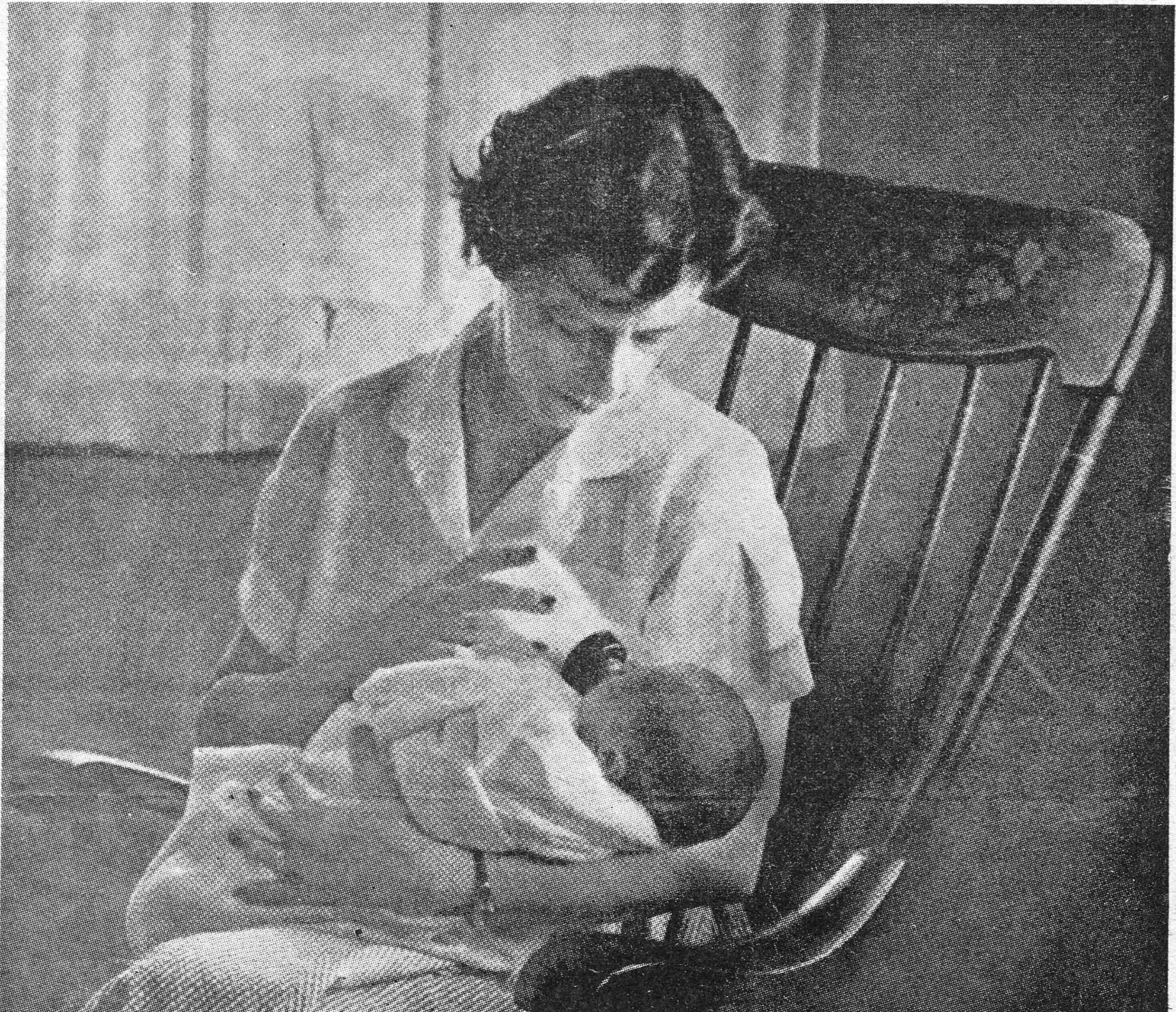
The second child we examined had frightened his parents with his frequent vomiting. The mother explained that her child takes his milk from the bottle while lying on his back; and since he kept spitting up, the mother
supposed the cause was that he
was eating too much — and so she reduced the quantity.
Vomiting in infants is sometimes the result of too much fat in the food; in this case the protein should be increased and the fats reduced. As for the vomiting that happens to children when they reach six months of age, it happens mostly as a result of
increased movement; a child also sometimes vomits if his food is more solid than it should be.
But ninety percent of the time the cause of a child's vomiting goes back to his not having been filled: a space is left in his stomach that fills with air, causing him to burp forcefully, which affects the stomach, and so he vomits
Mother! Your child tells you when he is hungry, so feed him and fill him, and thus you will avoid nearly all feeding problems.
his food. This condition occurs when the child does not go