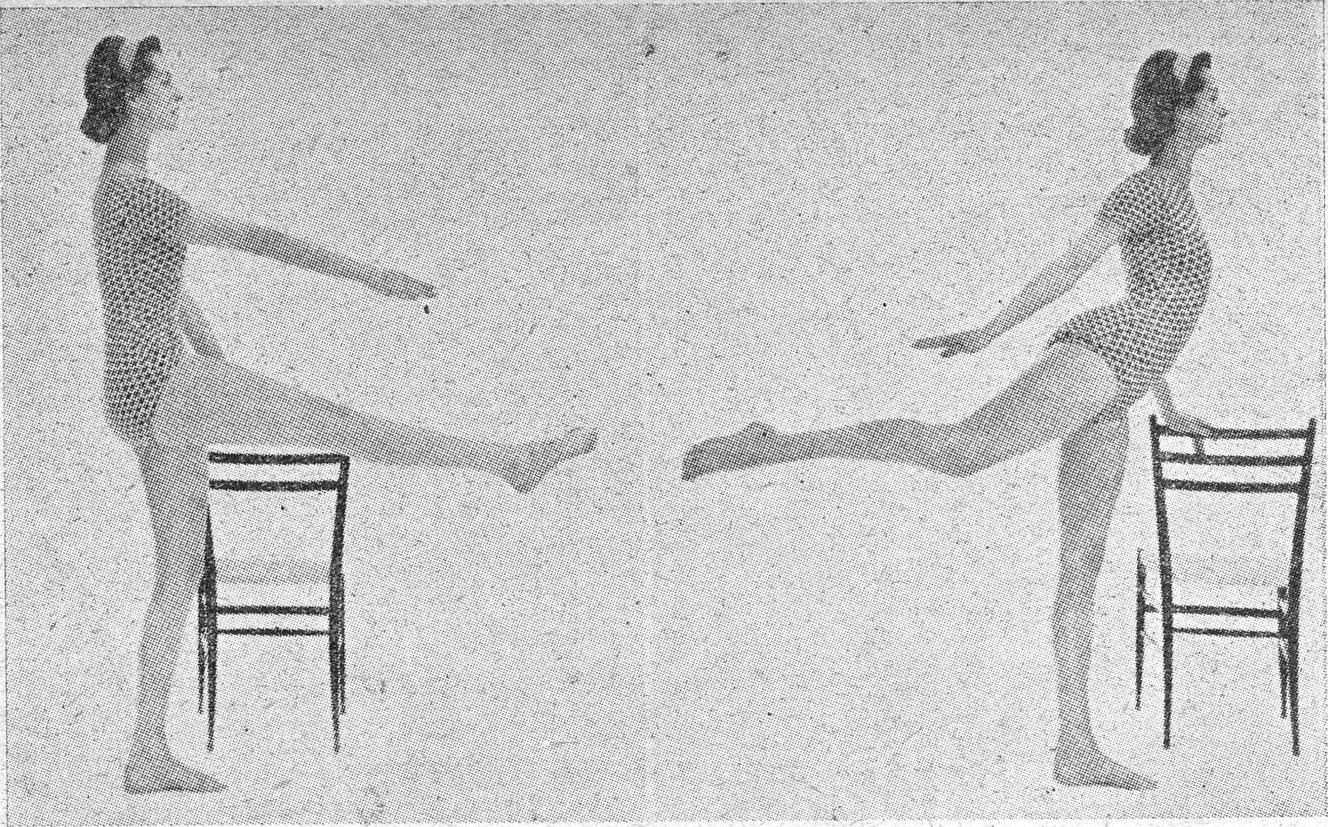
5 — For firm thighs: Stand beside a chair or table; raise the leg forward until you form a right angle, then carry the leg back, keeping your body in balance. Then try the exercise with the other leg.
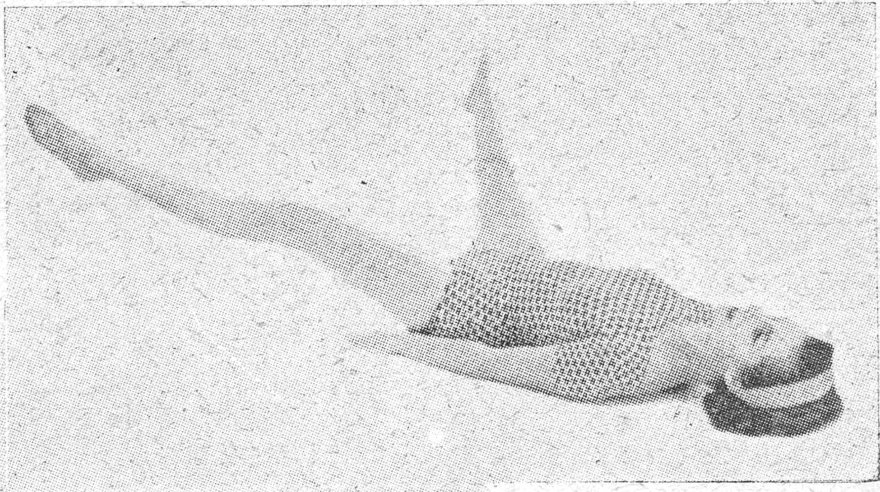
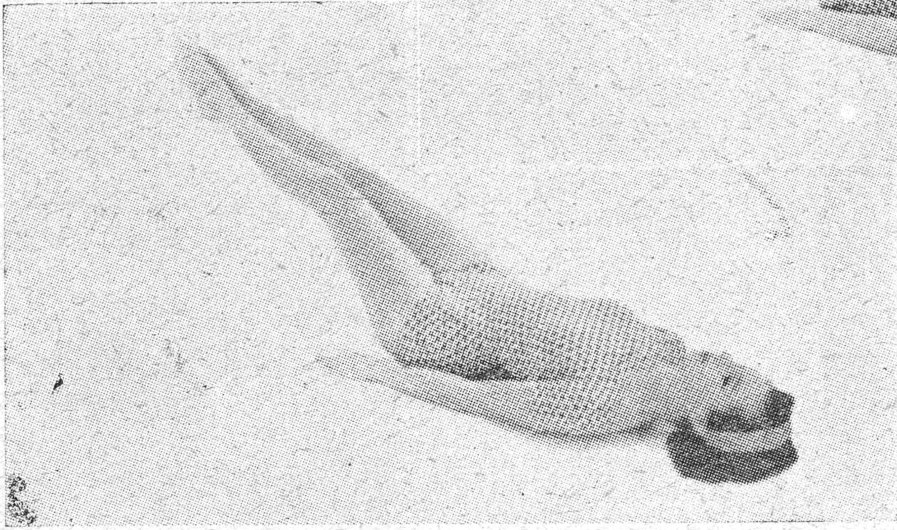
6 — For the abdomen: Lie on your back and raise your legs together as in the picture, keeping your arms stretched out on the ground. Spread the legs apart as far as you can, then bring them back to the second position; repeat the exercise 15 times.

to sleep after eating; with his movement the milk is churned in his only half-filled stomach, and he vomits as a result.
As for the treatment of the colic felt by the third child, it is to increase the quantities of food and to feed the child fewer times — unless the cause of the colic is a particular illness; for mostly it goes back to the presence of air in the child's intestines, passing there from his stomach because he was not filled and room was left in it for air.
Giving the child the chance to
burp during and after eating is a customary practice. But it is also necessary that the child burp before eating, to expel the air he swallowed while crying.
Waiting for the child until he is hungry is very different from leaving the hungry child to wait for his food. The child should not be bound to a strict feeding schedule, but should be fed whenever he is hungry.
How, then, Madam, can you know that your child is hungry? A child's crying in a particular way almost always means that he is hungry. When he is full he
sleeps, and he usually sleeps until his next feeding time comes. If he wakes and does not cry, you should know then that he is not hungry to the point of demanding his usual meal.
As for the fifth child, he was not sleeping well; and after going into the matter with the mother, we found that the child was not being filled — the blood therefore was not descending from the head to the stomach, and so the child stayed awake. By increasing the quantity of milk, the sleep problem found its solution.