Mrs. Angélique Kazan
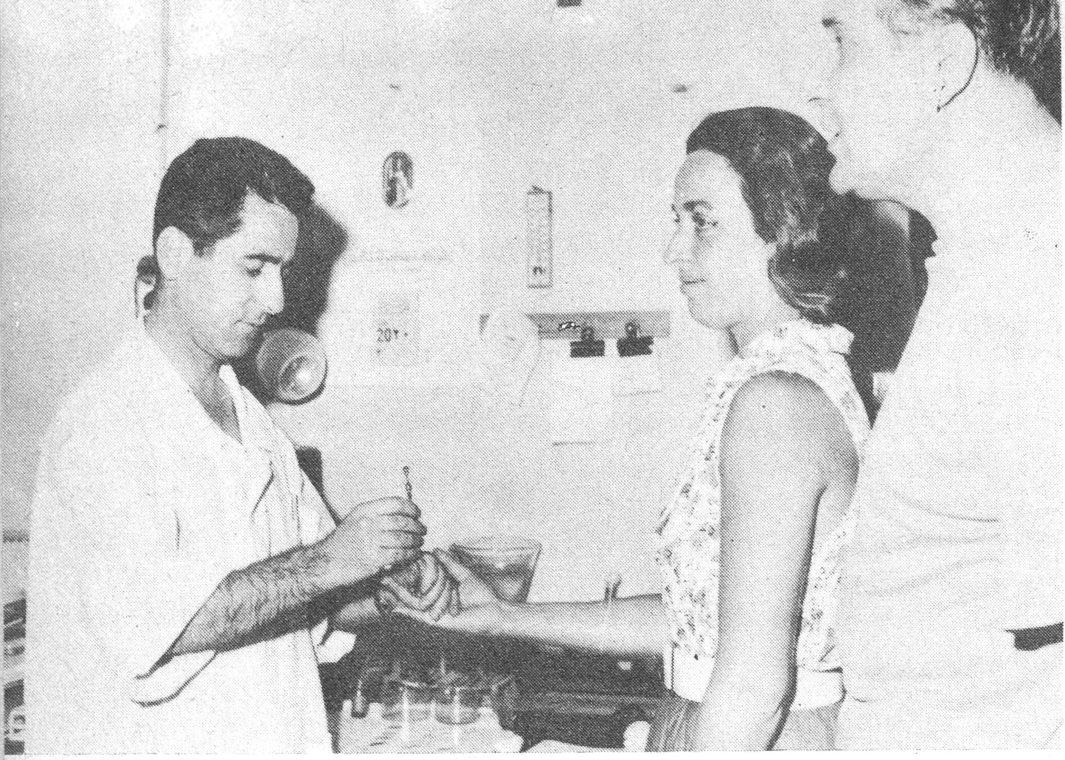
Taking drops of blood from the fingertip to learn the group to which the blood belongs
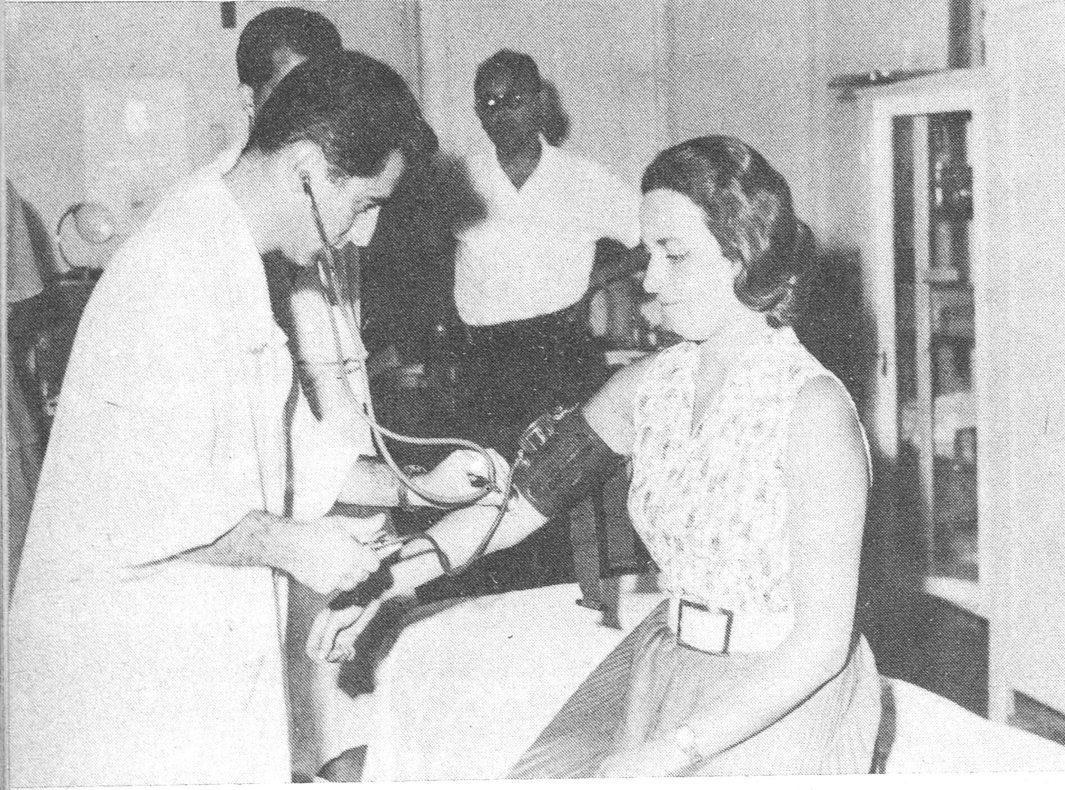
Measuring the blood pressure and making sure the health is good
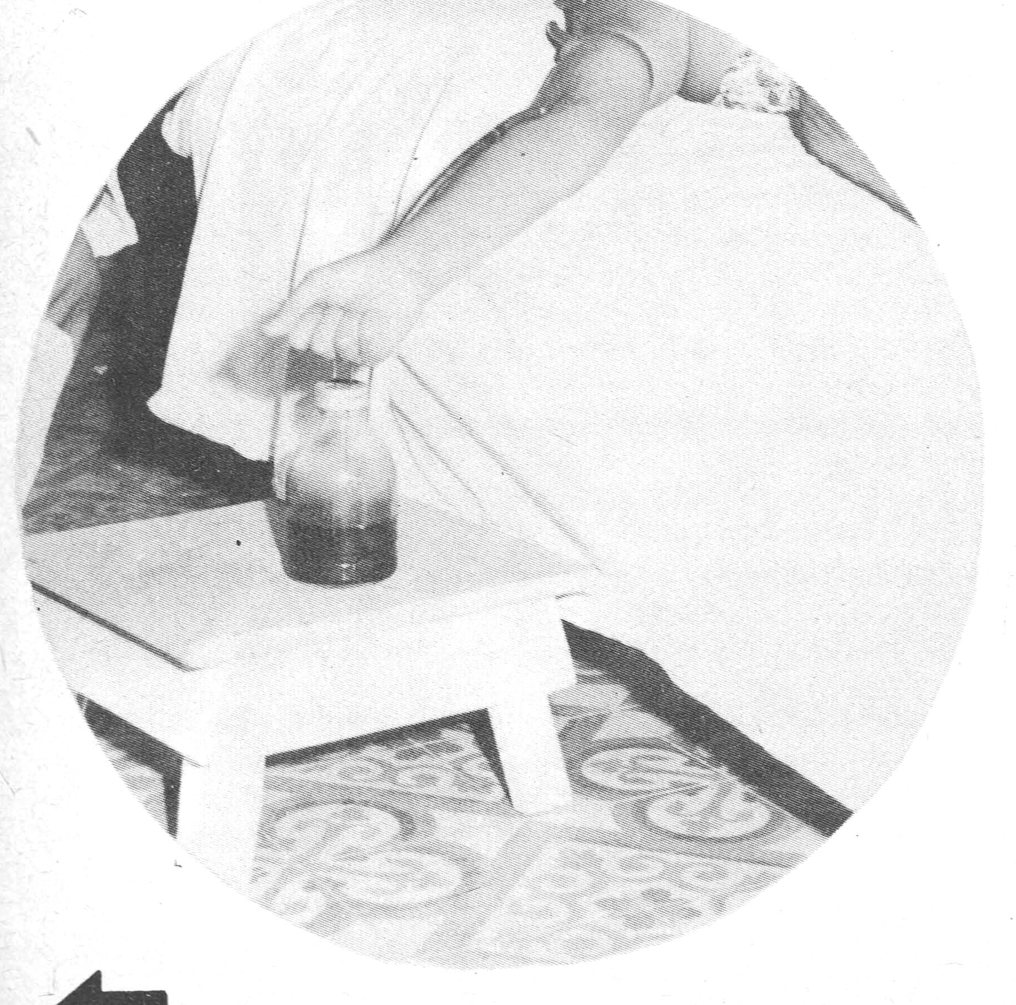

Transferring the blood from the vein into the bottle
These ladies have taken it upon themselves, in these critical circumstances, to meet every morning, to follow up, pursue, and carry out the emergency decisions the circumstances require.
Mrs. Alexandra Issa el-Khoury affirmed that the idea of establishing a "blood bank" belonging to the Lebanese Red Cross itself had long haunted minds and thoughts, and that nothing stood in the way of carrying it out except the lack of funds. "And so we decided at first to receive blood donors at the Health Center; then we moved to the Hôtel-Dieu hospital, where our apparatus is now at work collecting blood from donors and keeping it in the refrigerators, to be sent out with all speed to whoever calls on us for help."
In the Hôtel-Dieu laboratory you are received by Mrs. Eva Serhal, in charge of blood transfusion for the Red Cross, and you cannot fail to notice the quiet cheerfulness with which she welcomes the volunteers, men and women alike; she records their names, their addresses, and their telephone numbers, and then they pass into the laboratory, where drops of blood are taken from their fingertips so that, after testing, the group to which each one's blood belongs may be determined.
Mrs. Marcelle Hochar reminded me of the familiar saying: "My blood just doesn't take to his!" — affirming that this naive, primitive expression has today acquired a clear scientific meaning: human blood belongs originally to four groups, A, B, AB, and O — and the last group alone can be merged completely with the other three, which cannot be merged with one another... That is why group O is the most in demand. Its owners soon have their pressure measured, and if it proves normal they are stretched out in turn on a table, and the specialist transfers 200 to 400 c.c. of their blood into a special bottle, which is sent at once to the refrigerator and kept until it is needed.
As for those of blood groups A, B, and AB, they are set free — on condition that they remain on call, to be summoned individually when the need arises; and they answer the call at once, with an eagerness that draws tears of emotion.
Mrs. Serhal affirms that the need for blood is assured; and although the Red Cross has made no publicity beyond announcements in the newspapers, it constantly receives lines of blood volunteers at the rate of 12 to 15 a day. The number of those who have given of their blood, from the opening of donations on May 28 last up to June 20, has reached 128 persons. And what gratifies our national pride is that the women are no fewer in number than the men.
My visit to the Red Cross "blood bank" happened to fall just after a bomb exploded in the vegetable market, from which several innocent wounded fell, writhing on their beds as they waited for someone to save them with his blood...
I stood in line, waiting my turn and watching, while the