
For weeks now the sandy and rocky beaches along our sunlit coasts have been swarming with creatures — creatures of every kind — whose one concern is to enjoy the delights of nature, in the water and on the sands... And of all who enjoy these delights, none enjoy them more than the little children, for from spring onward they begin dreaming of running and playing and diving. How, then, shall we let our little ones make their dreams come true, and profit from every minute they spend on the beach? How do we train them to swim?
Madam: it is best, if possible, to let your child learn swimming at the hands of a special instructor; but if no instructor is to be found, take on the task yourself. The ideal way is for the two of you to begin the lessons as though you were playing — let us say "the train game"... or "the automobile game!" or "the boat game" — and
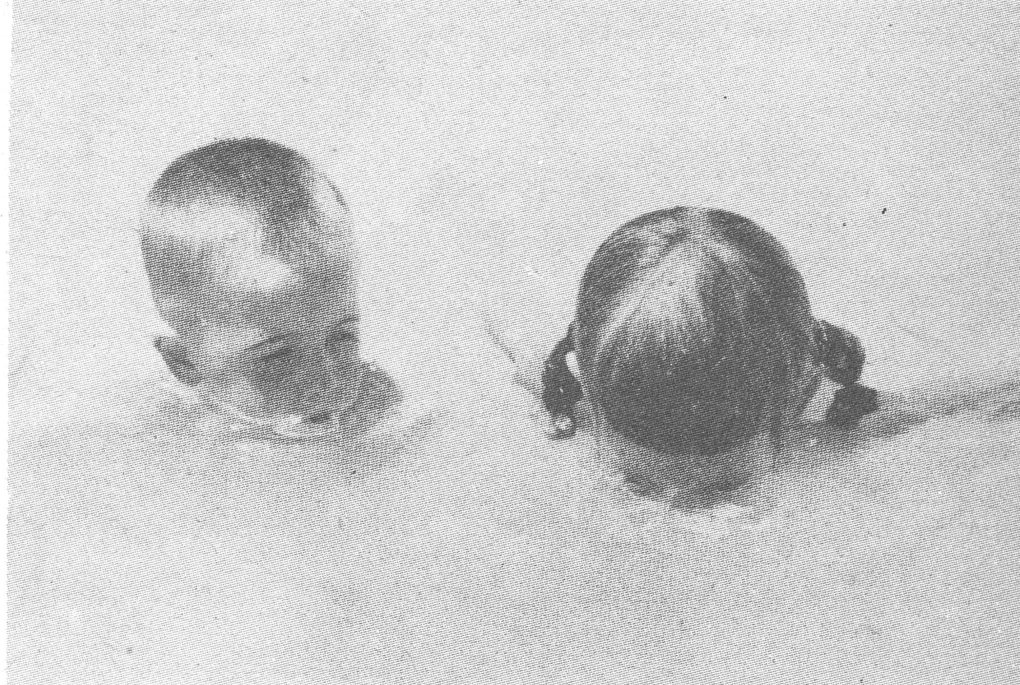
1 - The steamboat: the child ducks down until his mouth is level with the water; then he begins to blow out air, making a sound very like a boat's. This movement helps in floating.

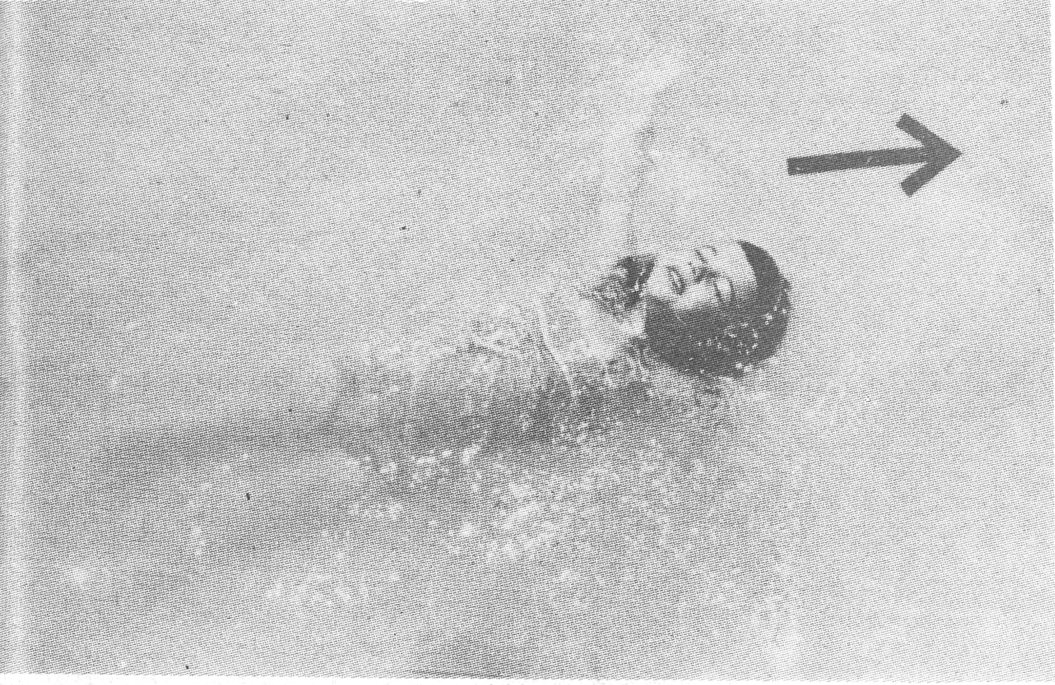
2 - The feather bed: the little girl finds it pleasant to lie back restfully if she imagines she is asleep on a bed of soft feathers! Paddling backward with her hands, while lifting the body in rising movements, helps in floating and in swimming on the back.
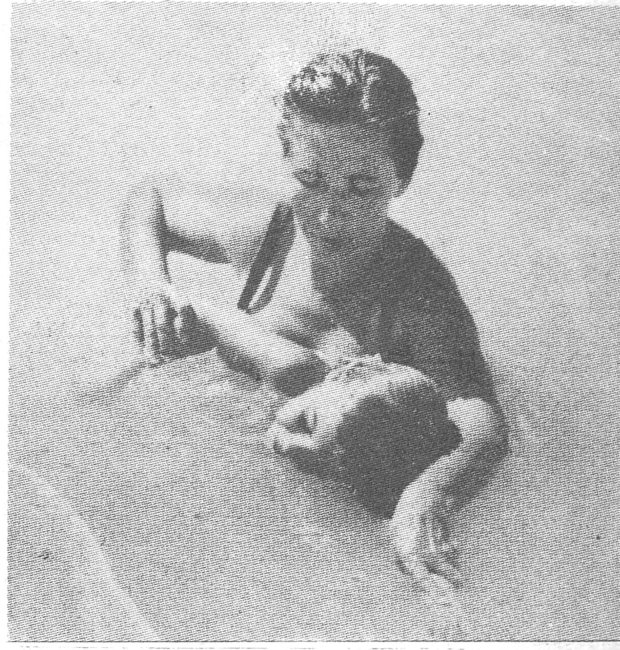
3 - After the child has gained self-confidence and feels at ease in the water, begin teaching him swimming in theory and in practice... just as in the picture.
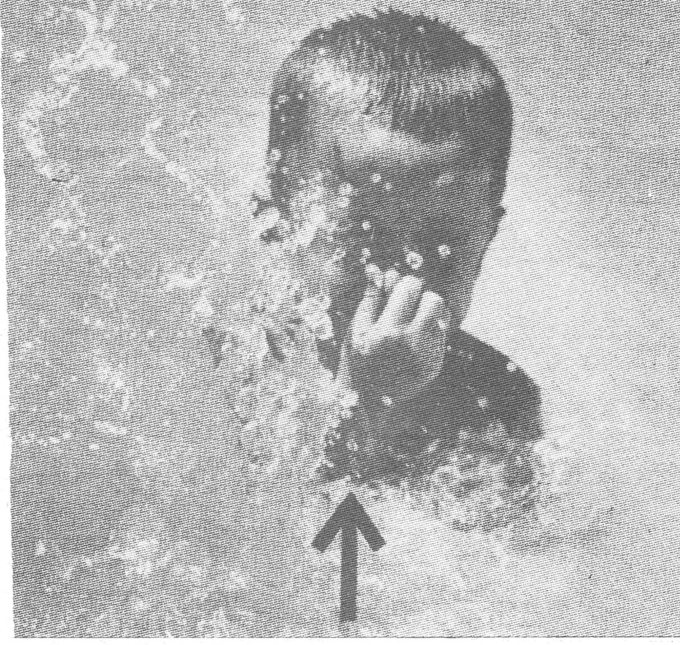
4 - Like the cowboys: the child should wash his face with the water, wet his nose, and dip his eyes...
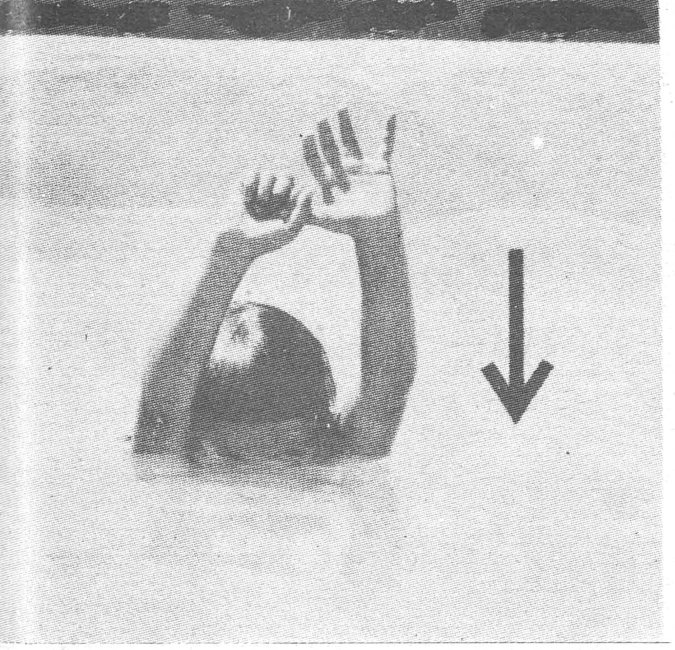
5 - Here the little girl raises her hands and holds her breath as she goes down slowly into the water, until she sits on the shallow bottom (of little depth).

try to teach him to imitate the movements of the train or the automobile or the boat... Then watch his wonderful response and his rapid progress!..
The truth is that the speed with which little ones learn to swim varies with their ages, and with their parents' familiarity with this art! It is natural for a child who opens his eyes upon two swimming parents
to show his readiness to go down to the sea even before school age... But the general rule is that the seventh and eighth years of age give the quickest results, because at this age the child has already learned from his teachers how to receive instructions, understand them, and apply them...
