strengthening of woman's culture before his eyes: despite his absorption in the problems of the people and the cares of the state, he followed the activity of the few schools, inquired into all that surrounded them, and spent his effort in encouraging them. And he made a habit of paying short visits, at varying intervals, in which he took care to encourage these institutions and push them along the courses of success and progress.
Add to this the solicitude he showed toward the infant women's renaissance by lulling the revolt of the strait-laced and the wrath of the reactionaries, to whom he would listen in his palace with forbearance and patience, doing his utmost to turn aside their anger by guidance and kindliness, so as to win their
And we do not overstep the truth when we say that King Faisal was ahead of his age in understanding the question of woman, and his successive stands reflected the most eloquent proof of the truth of his insight, his far-sightedness, and the soundness of his judgment.
Among what memory retains is that crisis which arose in 1923 because of what the late Sayyid Abd al-Rahman al-Naqib stirred up over my taking part in the literary Souk Okaz, and his condemnation of a young girl's taking part to play the role of al-Khansa. That opposition grew until the matter was raised to King Faisal, that he might speak the decisive word; and he declared himself in favor of my participation in the said Souk, in the manner I have related in an earlier chapter.
This decision, at which King Faisal arrived, carried a social meaning of great importance: it was, in sum, the first dawning of respect for the powers that the Iraqi woman represents. He championed her, and stood by her development with gentleness and forbearance, treating it with patience and wisdom, and tracing out its paths in safety and peace.
The first of the qualities of (Faisal), the champion of woman, that meets the eye is his pure instinct for encouraging learning, and for urging the Iraqi girl to drink deep from its springs — so much so that on one of his visits to the Central Girls' School he set aside (a fountain pen) for the pupil who excelled in Arabic calligraphy.
And on another occasion he announced his gift of a present to the girl who should win first place among her classmates! I recall that all these gifts fell to my lot. Indeed, among the marks of encouragement he continued to bestow — despite his absorption in the burdens laid upon him by the duties of kingship, the leadership of the renaissance, and the carrying of the mission — is an incident whose wonder does not fade, however long the time and however distant the era. When His Majesty learned that I had come first among the graduates of the Primary Women Teachers' Training College in 1928, he chose to set a fine example of his solicitude, his kindness, and his encouragement: he presented me with a diamond (brooch), invited my mother to an audience to congratulate her on the results I had obtained, and begged her to allow me to travel to the United States to complete my studies.
Nor did the King confine his concern to the care of woman's education, the multiplying of schools, and the achieving of aims and goals. The King kept the
help and support.
And the spurring of spirits toward culture — but he also took an interest in the athletic movement, the first attempt of its kind — so far as I know — witnessed by the girls' schools in this country, in the early days of national rule.
His Majesty placed at the head of his projects the principle that the perfect mind dwells in the sound body. And this is perhaps the first time the veil has been lifted from his consent to the forming of a sports team headed by his daughter, which no small number of Iraqi girls joined; they would hold matches in the palace gardens, at which he himself showed every kind of encouragement for their success.
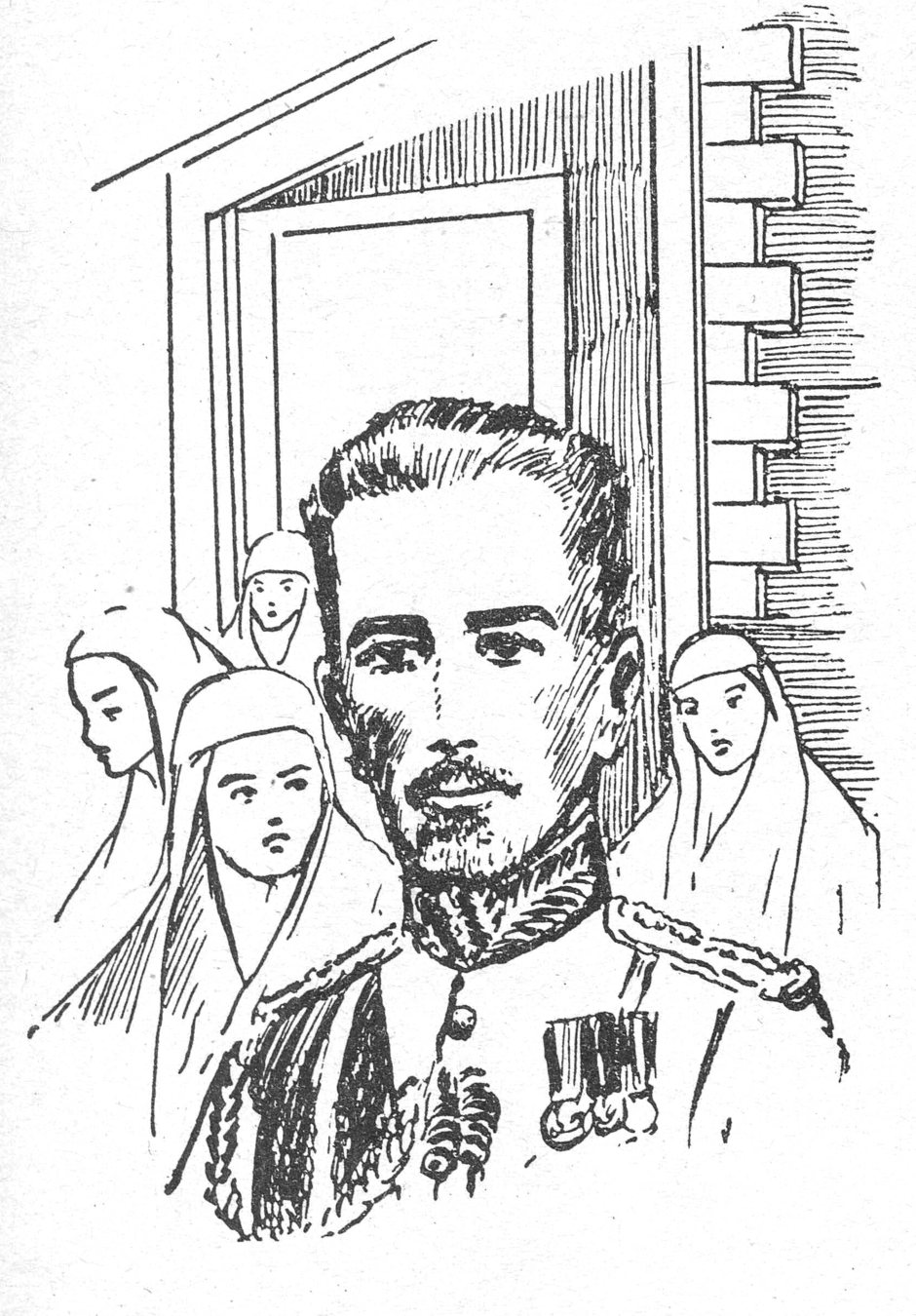
The King's popular and democratic spirit overflowed into the shaping and crystallizing of women's education. He set the best of examples by agreeing to the opening of a school to teach nursing to his daughters and to other Iraqi girls of that day.
And it comes to my mind that he entrusted the late Mrs. Amat Said with the teaching of his daughters, who were thus in the front rank of those who profited from the opportunities for education that King Faisal opened through his concern for spreading culture among women's circles.